

In the global scheme of things, it might not appear to be the most consequential drinks product launch of 2026. Rémy Cointreau’s tie-up with Whitebox on a line of RTDs for Islay single malt Bruichladdich is a limited run (5,000 cans) of a four-strong range, only available in the UK with no plans – so far – for international distribution.
But any fresh venture in RTDs is worth taking a second look at these days. In a challenging market for beverage alcohol in general, the pockets of growth that remain assume much greater significance. And RTDs are the one segment that has continued to expand through the Covid-19 bubble and beyond.
Go deeper with GlobalData


Access deeper industry intelligence
Experience unmatched clarity with a single platform that combines unique data, AI, and human expertise.
At the same time, the category is changing. The hard seltzer surge that marked the early years of the RTD boom has ebbed away and spirits-based products are emphatically where the action is. Growth has also focused on more premium price tiers, including around ‘bar-quality’ ready-to-serve (RTS) cocktails.
As RTDs mature and the scale of the opportunity – versus the stagnant mainstream drinks categories – becomes increasingly apparent, the obvious temptation is for marquee spirits brands to create their own branded RTD stable, opening up new avenues of growth. Jack Daniel’s is perhaps the most obvious example here – the brand has a long RTD history, bolstered in recent times by its tie-up with Coca-Cola. Others have followed.
But there’s always been a lingering suspicion that RTDs might not be for everyone. Some of their key attributes – convenience, portability, immediacy – could be seen to clash with the status of higher-end spirits brands, which might see their images tarnished by association. If you’re Pernod Ricard, for instance, would you be better off exploring whisky-based RTDs using Ballantine’s, rather than the more luxury-oriented Chivas Regal?
There’s an undeniable logic to that argument but I wonder if it is increasingly being undermined by the growing elasticity of the RTD category. Sure, there are plenty of cheap and cheerful hard seltzer brands still out there, whether made using malt or spirits bases but there are also top-quality RTS cocktails with prices fit to attract higher-end consumers in search of replicating the style bar experience in their own homes.
That seed was planted during the lockdowns of the Covid-19 pandemic and I don’t think it’s altogether withered and died in the years since – especially not in an era when cash-strapped consumers are perhaps more reluctant to pay elevated on-trade prices on a frequent basis.
This portion of the market is obviously where the Bruichladdich launch sits: the accompanying publicity material makes great play of the fact that the RTD category has “evolved significantly”, with Bruichladdich global marketing director Gareth Brown highlighting “the clear opportunity at the premium end for products that genuinely reflect the quality of the underlying spirit”.
This touches on a key point: if you’re going to launch high-end RTS products attached to your brand, you’ve got to get it right, especially when – as Bruichladdich is – you’re charging £6 ($8.08) for a 100ml can, or £20 for a four-pack. The pricing is, to say the least, ambitious.
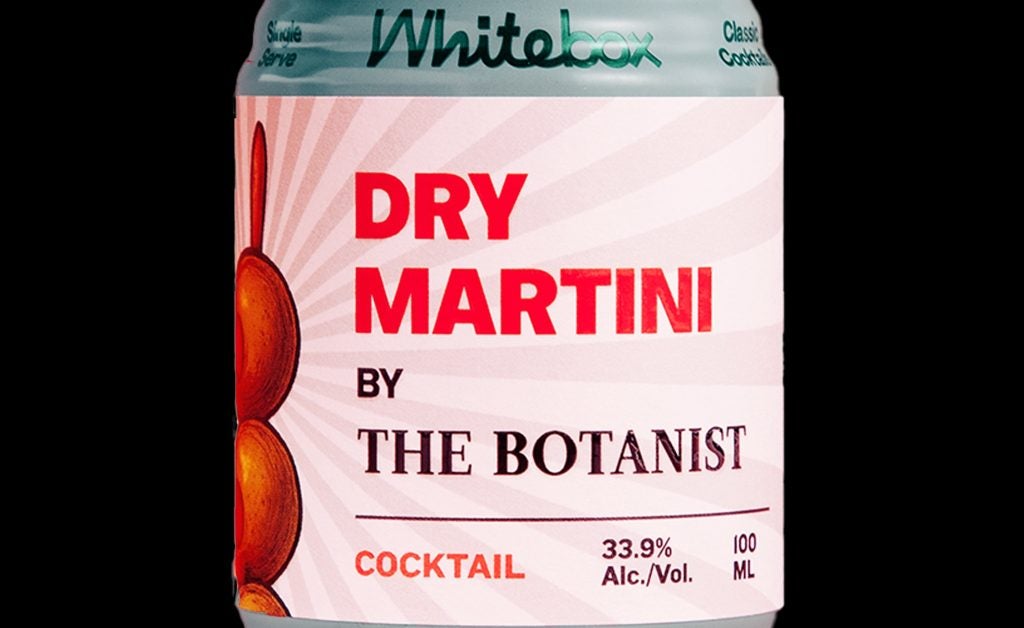
I haven’t tasted the Bruichladdich/Whitebox products but they’re certainly talking a good game. There’s the alcoholic strength, to start with: the Dry Martini has an abv of 33.9%, the Penicillin sits at 22.5%, with the White Negroni at 21.8% and the Whisky Sour at 19%. The Dry Martini and White Negroni are made with The Botanist gin, while the Penicillin is made with Port Charlotte peated single malt.
All too often, in my experience, canned cocktails compromise by driving down the abv (because of cost, presumably) and end up with a pale imitation of the original drink. As Whitebox co-founder John Rennie says: “If someone orders a Martini, it has to taste like a Martini.”
The choice of the individual cocktails also appears to tap into the key attributes of the Bruichladdich products: the Penicillin might not be the most obvious, crowd-pleasing option but it ought to prove a good vehicle for Port Charlotte’s full-on peat. No Passionfruit or Espresso Martinis here.
All of that said, these are expensive products, so it will be intriguing to see how quickly Bruichladdich sells through that initial 5,000-can allocation. Given the distillery’s loyal fanbase, I’d imagine they’d be snapped up pretty quickly but these are difficult times in which to launch a range in this price tier.
Whatever the success – or lack of it – that Bruichladdich finds with the Whitebox tie-up, it says much about the dynamic evolution of the RTD category that Rémy felt ready to dip a metaphorical toe in the pre-mixed waters at this time.
This probably isn’t a strategy that will suit everyone – since its resurrection, Bruichladdich has always enjoyed a more contemporary and youthful image than the typical single malt Scotch – but even so, I very much doubt that this will be the last venture of its kind that we’ll see in the months and years to come. RTD snobbery is a vice the industry can no longer afford to indulge.


