

“Our categories are roaring. Our customers are voting with their business and they are voting for us.” Those were the upbeat words of SunOpta CEO Brian Kocher in November after the US-headquartered food-and-beverage group booked a set of fiscal third-quarter results that included improved sales and profits. Three months on and it’s clear the plant-based milks, protein shakes and teas manufacturer has not only been attracting new clients.
Netherlands-based drinks multinational Refresco has swooped to buy SunOpta in a bid to bolster its position in the plant-based drinks market in North America.
Announcing the deal on Friday (6 February), Steve Presley, the recently installed Refresco CEO, described SunOpta as “an exceptional strategic addition to our portfolio”.
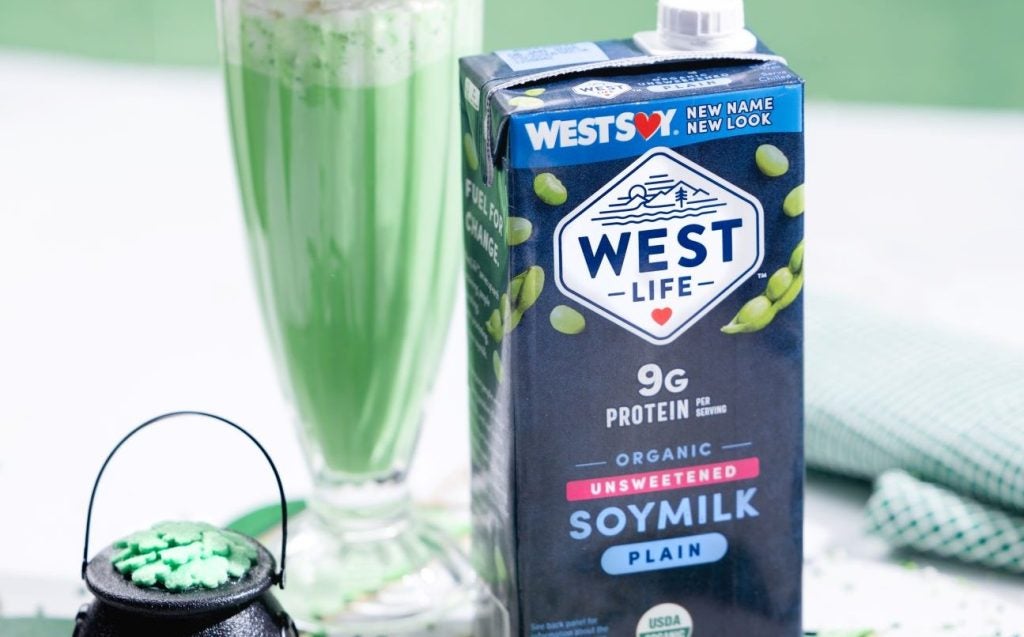
SunOpta owns brands including Sown and West Life plant-based milks but, like Refresco, an important plank of its business model is contract manufacturing for other brands.
Refresco, which manufactures a range of soft drinks from soda and tea to juices and plant-based beverages, has agreed to pay $6.50 a share for the publicly listed SunOpta. According to Morgan Stanley, which advised Refresco on the deal, the price implies an equity value of approximately $829m and an enterprise value of around $1.1bn for SunOpta.
The boards of both companies have approved the transaction, which the businesses said is expected to close in the second quarter, subject to customary closing conditions and the approval of SunOpta’s shareholders. Refresco is majority owned by private-equity firm KKR.
SunOpta spent the first half of this decade shedding assets to focus more on plant-based beverages, a product area the company deemed to have better prospects. Out went assets including organic ingredients in 2020, even though that business generated nearly $500m in sales. Two years later, SunOpta offloaded its sunflower and roasted-snack business and followed that up 12 months on by exiting the frozen-fruit market.
The company describes plant-based milk alternatives like oat, almond and soy as the “core” of its business. SunOpta does not specify exactly what percentage of sales come from plant-based milks but its broader “beverages and broths” product category (including plant-based milks, creamers, RTD shakes, teas and broths) accounted for nearly 80% of its $723.7m sales in 2024.
It's clear Refresco sees plant-based beverages as central to the deal, which, Presley said on Friday, “is consistent with our proven growth strategy to expand our capabilities into adjacent beverage categories”. He added: “The acquisition of SunOpta is highly complementary and significantly broadens our position in the fast-growing plant-based beverages category.”
In 2024, the most recent year for which the private-equity-backed Refresco has published sales, the group’s revenue stood at €5.99bn ($7.12bn), up just over 1% on 12 months earlier.
Refresco does not disclose sales revenue by product type but does publish volume figures. That year carbonated soft drinks and water each accounted for 26% of the company’s total volumes, which stood at 13.83bn litres (down almost 3% on 2023).
It was towards the tail end of 2024 that the company signalled its ambitions in the plant-based milks market with the acquisition of Spain’s Frías Nutrición. Refresco paid €197m for the business, which produces private-label alt milks for Spanish retailers.
Refresco dubbed that deal “a strategic expansion in the plant-based drinks category” but, with Frías Nutrición’s sales standing at €17m in 2024, the move for SunOpta is a move on a larger scale and one for a business that’s enjoyed strong top-line growth in recent quarters.
In 2024, SunOpta saw its revenue rise almost 16% year on year and, although it made a loss of nearly $18m, that was down sharply on a $180.8m loss in 2023 and was affected by interest payments. Operating income more than trebled and SunOpta pointed to a 17% rise in adjusted EBITDA.
Fast-forward to the results SunOpta published in November for the first nine months of 2025 and the company reported a 13% rise in revenues, increased operating income and, at net level, a profit of almost $10m (versus a loss of $8.7m a year earlier).
“We’d say they’re a best-in-class business for research and development, product formulations, creating products for their manufacturers,” Mizuho Securities analyst John Baumgartner, who covers SunOpta, tells Just Drinks.
“They’re a quality company because they’ve got this aseptic manufacturing technology, which is very expensive, so it’s a decent-sized barrier to entry. It’s a very good business, a specialised business but they’re very good for what they specialise in. That’s clearly accretive to Refresco who doesn’t have as large of a footprint in North America in these categories.”
According to Refresco’s 2024 annual report, the company has more than 30 facilities in North America. That year saw the group add to its presence in the region with the acquisition of California-based VBC Bottling Company to bolster its position on the West Coast of the US. The business, however, closed two sites in the country two years ago.
On Friday, Presley, a former CEO of Nestlé’s business in the US, noted how the move for SunOpta “enhances our existing North American presence and capabilities, supporting a more balanced geographic footprint between North America and the rest of the world”.
However, sales of plant-based milks in the US retail channel have slowed in recent years. According to SPINS data published by The Good Food Institute, plant-based options accounted for almost 15% of US retail sales of all milk in 2023. Unit sales were down 8%. In 2024, plant milk’s dollar share stood at $2.8bn, or “about 14%” of the overall milk category at retail, the GFI said. Unit sales fell 4%. By contrast, that year saw conventional milk dollar sales and volumes rise.
“Four in ten US households purchased plant-based milk in 2024. Penetration rate was relatively unchanged from 2023,” the GFI said in April last year. “Repeat rates held steady, with 76% of households purchasing in the plant-based milk category more than once.”
Nonetheless, Kocher’s comments to analysts in November underlined how positive SunOpta was about its own business. “We continue to win with category-leading customers in high performing categories and channels,” Kocher said. “Plant-based milk volumes increased at a high-teens rate in Q3. We have exceptional momentum in the club channel as well as continued strength in foodservice, where we continue to drive both menu expansion and share gains.”
And, while the momentum of plant-based milks may have slowed in the US retail market, trading has been stronger in the foodservice channel. “Circana data disclosed the plant-based beverage category grew 9% in foodservice. Menu innovation is creating new purchase occasions and driving frequency,” Kocher told analysts.
The SunOpta CEO also pointed to the expansion plans of coffee-shop chains including Starbucks, Dutch Bros and Seven Brew. “Based on consumption trends and population growth, we anticipate that the number of US coffee shop units will grow by approximately 20% over the next five years,” he said. “Remember, our products are featured in eight of the top ten coffee chains across North America, including all four of the fastest growing chains.”
According to Baumgartner, retail sales of plant-based milks in the US have suffered for two reasons. Demand among shoppers that moved to the fixture during the Covid-19 pandemic fell back as prices rose amid the general wave of food inflation seen in recent years. He also points to the relative lack of protein in most alt milks at a time when consumer interest in the ingredient is high.
“You're still seeing pretty good growth in foodservice/coffee shops’ distribution growth,” Baumgartner says. “People are still using it more as a creamer. You’re seeing companies like Starbucks who are actually using plant-based beverages as the actual base for drinks.
“We don’t think the category is dead in the US but it’s definitely at a disadvantage because of the lack of protein content. We’re still positive on the category. It’s just going through some, I guess, relevance pains right now with the protein movement.”
In the third quarter of last year, SunOpta said it battled to meet demand that Kocher said “stressed our supply chain”, weighing on efficiency and pushing up costs for parts and overtime. As a consequence, it had to hold back efforts to boost margins.
The company has invested in production ahead of the demand it expects to continue to see. A new aseptic line at its site in Texas, which Kocher said in November was “already over 50% subscribed”, is set to start production later this year.
In fact, the prospects that some saw ahead for SunOpta led to some downbeat comments about the price Refresco is paying for the business.
“At circa 10.5 times forecast FY26 EBITDA, the takeout multiple is somewhat disappointing for SunOpta’s advantaged positioning in an attractive category, which creates strong long-term sales and earnings growth potential,” BMO analysts led by Andrew Strelzik wrote in a note on Friday.
“Given SunOpta’s advantaged positioning and its multi-year effort to evolve its portfolio to a more value-added, less-commoditised model, we have long argued SunOpta is undervalued by the market. We acknowledge, however, that execution challenges over time likely contributed to the underwhelming acquisition multiple and that key SunOpta investor investment horizon perhaps contributed to the willingness to see at these levels and that the potential pool of acquirers is narrow.”
Nonetheless, the BMO analysts described Refresco as a “logical strategic acquirer” due to the category and geographic gaps the prospective buyer is filling through the deal.
“SunOpta’s US plant-based beverage, broth and aseptic capabilities align well with Refresco’s portfolio and private ownership could allow for faster operational remediation and margin normalisation outside the constraints of public-market reporting,” they said.
“SunOpta’s broad customer portfolio and fragmented (smaller) direct competitive set creates a limited buyer pool, so we would be surprised if another strategic buyer were to materialise.”
Baumgartner suggests the $6.50-a-share offer is another sign of the way the broader market are valuing US food-and-beverage stocks.
“Our price target was $8 so it’s a little bit below where we thought fair value for the business was but, as you’ve seen more recently, with this transaction, with TreeHouse Foods being acquired by Investindustrial, Smithfield Foods buying the Nathan’s meats business, what seems to be happening right now is, in the public equity markets, the way public investors are evaluating food businesses, it's very, very low. There’s a lot of money chasing tech stocks. You’ve got the public markets viewing food and beverage as structurally impaired for growth, limited pricing power, vulnerable to private label, vulnerable to these small start-up brands,” he says.
“What we’re seeing through these transactions is strategic buyers, the smart money, they’re actually doing these valuations very reasonably, so it’s driving a lot of interest from private companies, private equity to come make acquisitions at these valuations.”