
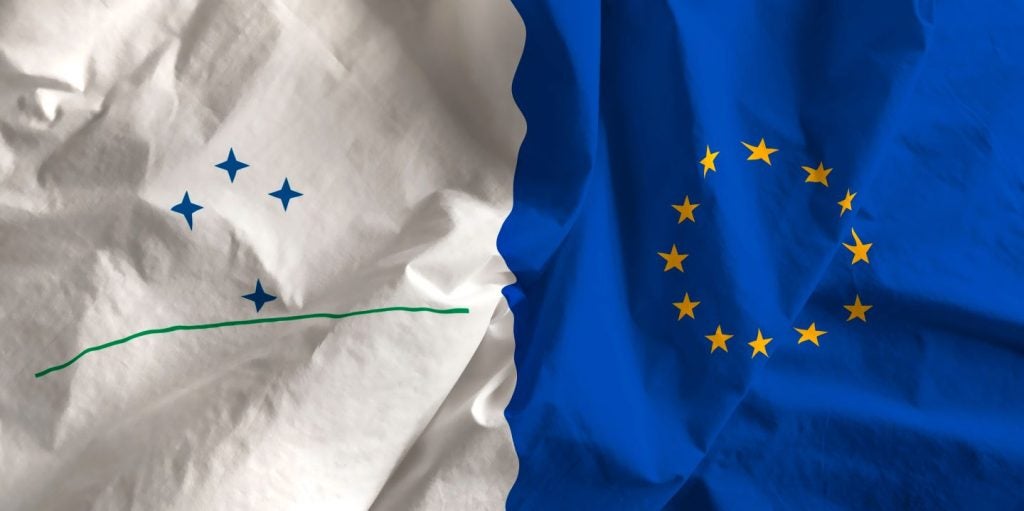
The EU has delayed the signing of a free-trade agreement with the Mercosur bloc of countries.
European Commission president Ursula von der Leyen yesterday (18 December) confirmed the EU had agreed to delay signing the deal with Brazil, Argentina, Paraguay and Uruguay, to January.
"We need a few extra weeks to address some issues with member states," she said in a statement. "We have reached out to our Mercosur partners and agreed to postpone slightly the signature."
The agreement has seen opposition from Italy and France.
The trade deal, originally agreed in 2019 after more than 20 years of negotiation, has faced repeated delays due to resistance from several EU member states.
A "political agreement" was reached between the EU and the Mercosur bloc in December last year.
If ratified, the deal would establish the “world’s biggest free trade zone”, encompassing a market of over 700 million people, according to the Commission.
"This deal is of crucial importance for Europe – economically, diplomatically and geopolitically," von der Leyen insisted on Thursday.
"It opens new trade and economic opportunities for all our member states.
"With additional checks and safeguards, we have built in all necessary protections for our farmers and our consumers."
Yesterday, the European Parliament and Council negotiators also informally agreed on agriculture "safeguards" that are intended to protect EU farmers.
Both parties have agreed to tougher rules on the imports of goods from the Mercosur bloc, which could see the Commission temporarily suspend tariff-free imports on "sensitive" agricultural goods, including poultry, beef, sugar, eggs or citrus products if shipments are viewed as harming European producers.
Under the agreed measures, "an investigation into suspending preferential tariffs" would be triggered by a rise in import volume of over 8% or a slump in prices of more than 8% compared to a three-year average.
The Commission could also choose to monitor "non-sensitive products" if requested by the local industry.
As it stands, the provisional agreement still requires the "formal adoption" from the European Parliament and Council before it can officially enter law.
In September, the Commission had originally tabled a proposal to temporarily suspend or reduce tariff concessions if import levels rose by over 10%.
In September, a group of EU agri-food organisations criticised the proposed safeguard mechanisms, expressing concern the deal could drive up competition and lower prices and product standards.
At the time, nine organisations, including principal EU farming lobby Copa-Cogeca and AVEC, representing the poultry sector, claimed the EC’s package still “falls short”.
"While this initiative clarifies certain aspects of safeguard implementation, critical questions remain over how such a unilateral legal act would be voted on, enforced, and accepted by Mercosur countries as a binding commitment by the Commission,” a statement read.