

Brown-Forman doesn’t really do boardroom chaos. In a note published following the announcement that president and CEO Lawson Whiting is to retire, analysts at Bernstein highlighted the company’s “stable and dependable leadership team” as a key strength.
History bears this out. Brown-Forman has had only ten leaders since its foundation in 1870 and just three CEOs in 33 years, from Owsley Brown II (1993-2005) to Paul Varga (2005-2018) and then Whiting. And all of those appointments were internal: a member of the owning family, then two executives with 18- and 21-year company careers respectively prior to taking up the top job.
Go deeper with GlobalData


Access deeper industry intelligence
Experience unmatched clarity with a single platform that combines unique data, AI, and human expertise.
Transitions are carefully managed to minimise disruption and uncertainty. When Varga stood down, his retirement – and Whiting’s appointment – were announced seven months before the handover. This time around, the company is at pains to emphasise that Whiting will be sticking around to enable a smooth handover but there is no anointed successor and the search will encompass both internal and external candidates.
What are we to read into this? There doesn’t seem to be a dearth of possibilities within the Brown-Forman senior leadership team: Bernstein reels off CMO Jeremy Shepherd (21 years with the company), chief strategy officer Chris Graven (also 21 years), Americas president Michael Masick (16 years) and Europe, Africa and Asia Pacific president Yiannis Pafilis (28 years). Analysts at TD Cowen namecheck Masick and chairman Marshall Farrer, another 28-year company veteran and a member of the owning family.
Perhaps that’s the point: in 2018, Whiting was the obvious and unanimous choice – the result of succession planning dating back more than a decade, already COO and executive vice president, having worked alongside Varga for 20 years. He had also been instrumental in reshaping Brown-Forman’s portfolio, involved in the acquisitions of BenRiach in Scotland and Slane in Ireland, as well as significant investment in Woodford Reserve and Old Forester.
So it may be that there is simply no clear front runner within the company’s ranks this time around. Then again, the family may look to follow in the recent footsteps of Diageo and Heineken, both of which looked beyond the industry for their new leaders.
After all, Jim Peters, who took over as Brown-Forman CFO in May, joined after a 20-plus-year career at Whirlpool Corporation. And the fact that a new boss will be surrounded by so many Brown-Forman company veterans may smooth their path in getting to know the business and the industry.
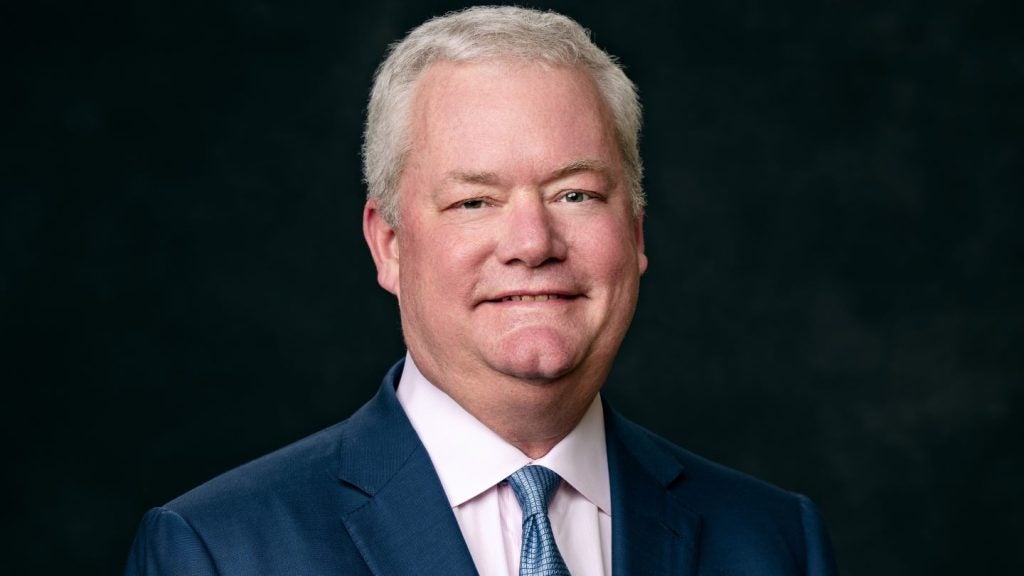
Certainly TD Cowen reckons an external candidate would offer a fresh perspective, suggesting in a note: “We believe investors may view the succession process as an opportunity for Brown-Forman to pursue a more meaningful strategic reset aimed at improving growth, execution and shareholder returns.”
That “strategic reset” could have been engineered by the “merger of equals” that Brown-Forman and Pernod Ricard failed to get over the line earlier this year, followed by the unsolicited (and ultimately unsuccessful) approach by Sazerac. According to TD Cowen, that saga indicates that the company’s family ownership is a “significant hurdle” to any sale – and the analyst does not expect any resurrection of M&A talk with Whiting’s departure.
The elephant in the room here is the current plight of the spirits industry and of the US market in particular. Whiting’s seven-and-a-half-year tenure may have been relatively brief by Brown-Forman standards but it’s certainly been eventful, taking in the Covid-19 pandemic boom, the subsequent handbrake turn in consumer demand, tariffs and the Canadian boycott.
The company reaction to these challenges paints this changing picture in stark relief. The overseas acquisitions in which Whiting played an instrumental role – the BenRiach and Slane operations – have seen production halted to allow ageing inventories to unwind.
First the stills went quiet at Glenglassaugh, moving to a “shared production model” with BenRiach, before that too stopped distilling. In June, it was revealed that Slane too had fallen silent, with former site manager Alan Buckley suggesting in a LinkedIn post that the pause would last for the “next number of years”.
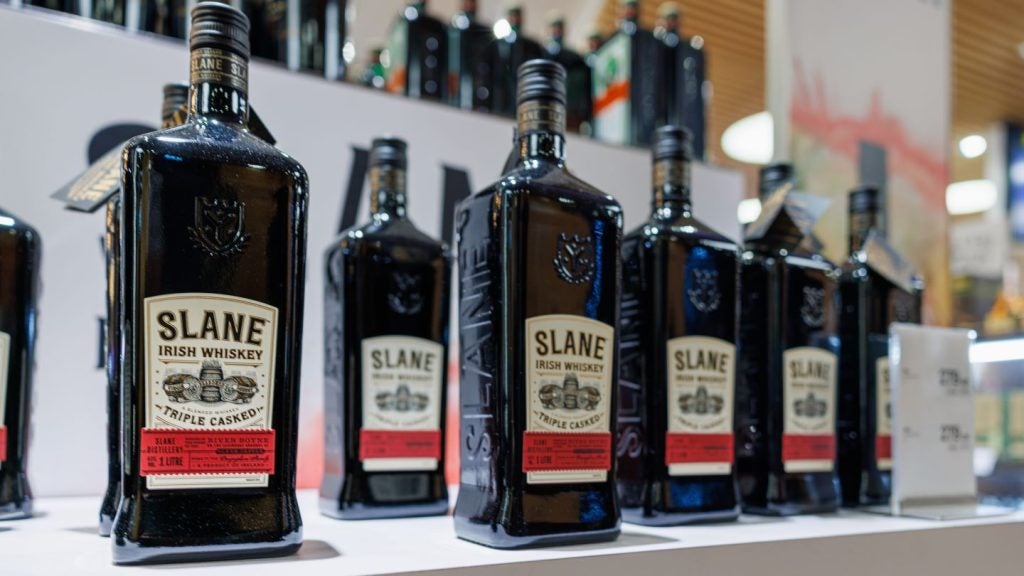
That clearly implies that there’s quite a mountain of inventory to work through – and hints at some regret that Brown-Forman was quite so bullish in pushing production hard before the Covid bubble burst. Don’t forget also that, as recently as 2024, the company was still aiming to double the size of its American whiskey business by 2032. You need a heck of a lot of stock to achieve that.
If all of this represents quite a legacy for Whiting’s successor to inherit, it’s only fair to contemplate the departing CEO’s tenure in the round. Brown-Forman’s shares were trading at around $47 when he was appointed, peaking at close to $80 at the height of pandemic demand; when Whiting’s departure was announced, they were worth $26.25.
That is surely a comment on the plight of the industry, rather than the qualities of the man. During results presentations and investor days, Whiting was always an engaging speaker, combining no-nonsense pragmatism with disarming honesty and a touch of humour – perhaps liberated by the company’s family ownership in a way that is not so easy for many of his rivals.
It’s hard to accurately measure the success of a CEO’s stint when he or she is so clearly at the mercy of events but it’s noteworthy that Brown-Forman’s shares dipped by around 5% when the news of Whiting’s departure broke. That may be a reaction to the simple fact of change at the top but it also says something about the credibility and reputation of the leader in question.
There are some big questions for the future direction of Brown-Forman in 2026. Are the current trading conditions in the US cyclical or structural? How can margins be preserved or boosted at a time when expensive ageing whiskey is coming online, but there is limited scope for price hikes? What is the vision for continued international growth?
Those are all challenges but also opportunities. Whoever succeeds Whiting – whether they come from inside or outside the business – does so at a difficult time for the company and the industry it inhabits but the fundamentals of both remain strong. In that, at least, there are still grounds for optimism: as one door closes, another one opens.


