
UK-based Canned Wine Group describes itself as “leaders in the transition towards future formats”.
Part of the group’s portfolio includes canned wines which it sells in the UK and multiple European markets under its brands Canned Wine Co. and The Copper Crew, which it bought in 2023.
In early 2025, the group launched 20-litre kegs in the UK under The Copper Crew brand, a product it also plans to take to Ireland this year.
Booking £1.7m ($2.2m) in revenue and selling just over one million cans in 2025, the group is looking to hit more than £3m in revenue this year, helped by the new kegs, according to co-founder Ben Franks.
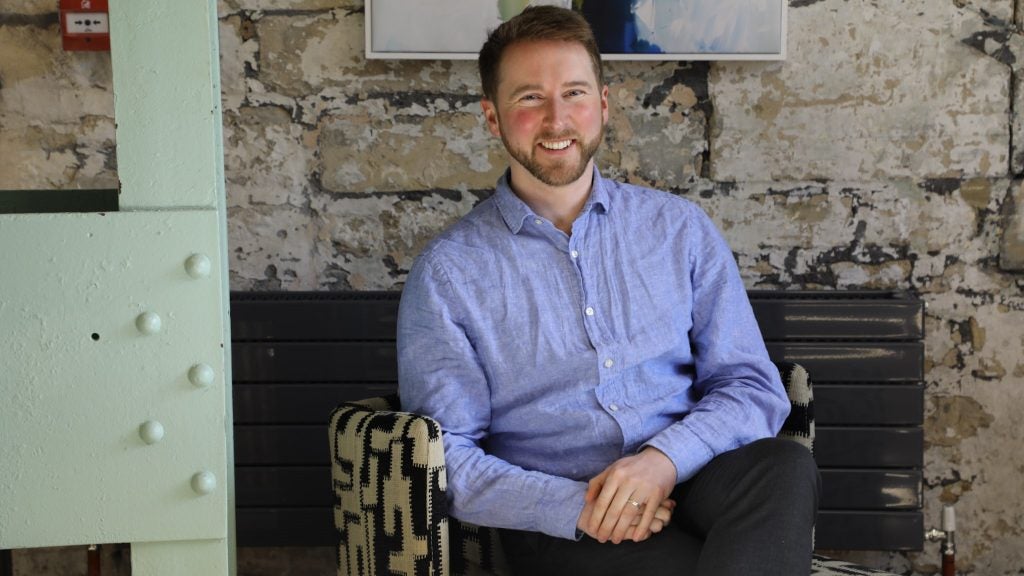
Just Drinks sat down with Franks to discuss Canned Wine Group’s plans, including its bid to build a more sustainable product for the on-trade through kegs.
Fiona Holland (FH): At Eco Drinks this week, you'll be speaking on the opportunities to expand offerings for wine on-tap. Why is wine on-draught a more sustainable offering than bottles?
Ben Franks (BF): It could be. We're at the very early stages. One of the challenges with the wine industry is it so dominated by bottles. The dispense market is dominated by beer and soft drinks and, because of those two teams in the route-to-market, beer distributors don't tend to work together as much.
Wine still sits very separately to that. Until there's a scale of demand of wine on-draught that is equal to, or competing with soft drinks and beer and cocktails on-tap, which is a fast growing market as well, then the people who manage those distribution systems are very much owning the conversation for beer and softs but pushing out wine.
Part of the talk is about how we make draught wine a viable alternative for the places that do high-volume house wines. It's not about replacing every wine on the list. There's a place for premium bottles in a lot of hospitality venues but the quality we're having at the house pour is getting worse because of the price pressures and margin pressures in hospitality. Instead of continuing down that road where people drink less wine because the quality offering continues to be so poor, we're looking at the ways kegs can help deliver.
The challenge we have is the material, the keg itself. For wine, we use KeyKeg because the bag avoids the wine touching any gas or air pressure, so you don't end up with dissolved CO2 in lines and you don't oxidise it either.
Instead of continuing down that road where people drink less wine because the quality offering continues to be so poor, we're looking at the ways kegs can help deliver
Because we use KeyKeg… it's kind of a one-way product. There is a drive by KeyKeg to get some of those empty KeyKegs back into new kegs through recycling at [their] plants. But because we don't have the volume of distribution in the UK yet, there isn't that middle person, a distributor, who's willing to collect a load of empty KeyKegs and then send it back to close that circular loop.
We’re playing off on this compromise where we're using KeyKeg because it's the best fit for the format, the quality and to justify the operational fit. It's going to take time to build up enough demand and enough distribution points that we can convince route-to-market providers.
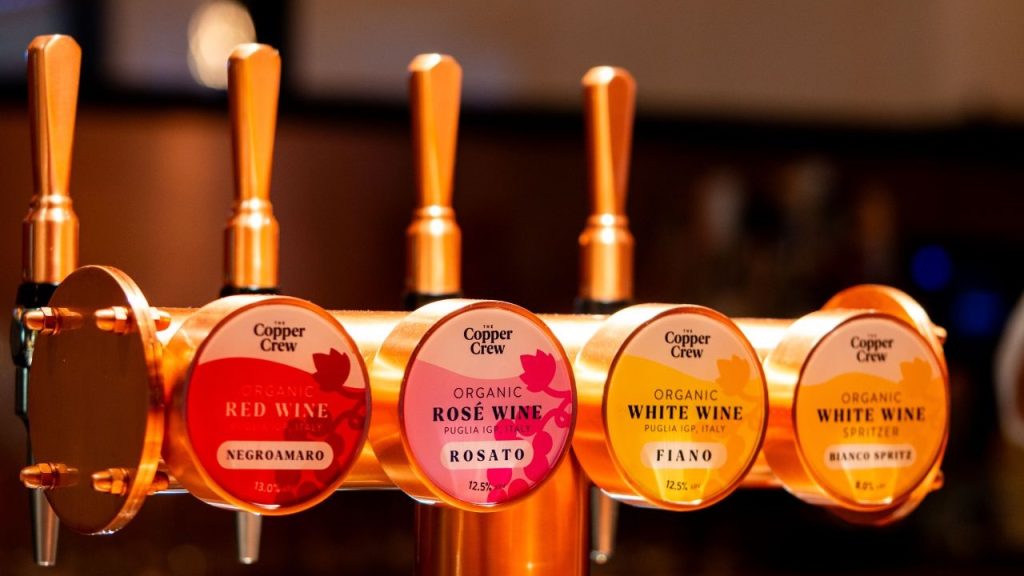
FH: You launched kegs in the UK last year. How has that gone so far?
BF: Sales [value] through half one last year to half two, we had a 175% increase. It still came from a low number of sites, relative to [what] we had hoped to do by now but the volumes were higher on the per site level. What that's showing is, at least for us, there's a good consumer adoption of the format and there isn't hesitancy at the actual bar level.
Some of the things we're quite keen to stick with are the interesting grape varieties. We launched the Fiano, the Primitivo grape Rosato and Negroamaro.
We’re servicing something that the consumers gel with quite well, which is reflected in the volume of sales on site. We're still having those difficulties with the people who make the decisions, who want your Sauvignon Blanc, your Merlot, your Malbec, or the ones that on paper are selling the most. You've got to have that discussion with them that it's selling the most because it's the only one available.
FH: In which markets do you see the largest opportunity for wine on-draught?
BF: The opportunities for wine on-draught might surprise some people. What we're looking for is those places that are already high volume, usually with a strong carafe culture, so ways of serving beyond just the glass.
We're looking at a lot of the island cultures, where you've got lots of expats, the Malta, Lanzarote, Tenerife, Caribbean island markets. Then we've got urban sites, places like Paris, Bordeaux. In the Netherlands, there's a huge drive for organic and sustainability.
What we'd do, if we can perfect or at least get closer to a circular economy on kegs, is start to look at geographical placement. Whether we look at a city or two in new EU markets in France and Netherlands, simply because they're the closest and start modelling out some of that.
What you have on the circularity side that's challenging in these expat island markets is how you get that empty keg back to wherever it needs to go to either be recycled, refilled.
FH: Do canned wines make up the bulk of your business?
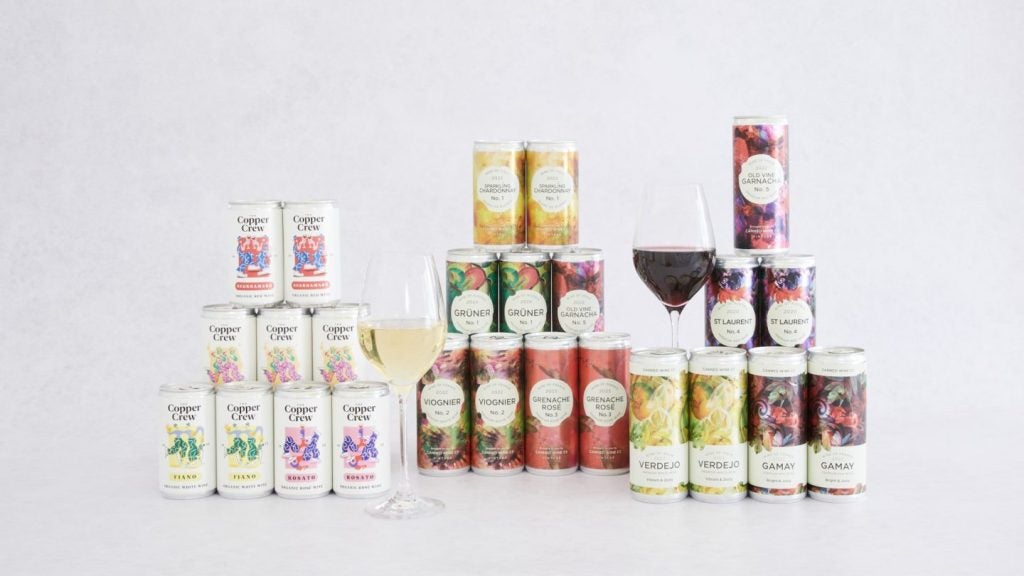
BF: The Copper Crew brand has fast become our biggest brand and that stretches across the cans and the kegs. We've still got the premium range in the Canned Wine Co. five [SKUs]. Then we're looking at launching a step up above that in a new signature range [to] really push the envelope with quality on the canned market but appreciating that Canned Wine Co. is an £18-25 bottle equivalent [which is] already in that smaller part of the market commercially.
What we're also doing with The Copper Crew is growing its availability now that we have this C&C preferred partnership [the companies supplies wine on-draught to C&C]. I'm confident with the right customers the keg side of The Copper Crew, on a hectolitre level, will quickly overtake the can market. But then we've got value retention in the can side, so they complement each other quite well.
FH: Where do you sell the canned wines in Europe?
BF: We sell in Malta, Greece, France and the Netherlands.
This year because we had 97% B2B [on-trade] and we do very little retail, our aim is to do more on that consumer level. What we're now looking at as a brand is how do we take things like The Copper Crew and Canned Wine Co., so the signature range, for example, and build up a strong consumer following for those wines as well? A lot of this year, we're going to be exploring expansion into that retail space and doing more with the consumer directly.
FH: Is that mainly in the UK you would be doing that?
BF: UK to start with but we don't have the same hesitancy with kegs, so if there's a demand and a new market, we would also move the model there as well.
FH: When we last spoke, the business planned to raise £3m by the end of 2025. What progress did you make with that?
BF: The market's quite difficult and the amount we raised was roughly £1m last year. Because we didn't raise as much as we wanted to, we didn't get some of the growth that we also anticipated. There's higher risk aversion in the market in terms of fast-moving consumer goods generally from investors. There's also a demand for profitability, which is tough to get to in any goods market, from certainly VCs and private equity.
We're in this very difficult middle ground between being too big for most angel-level investors and that early-stage equity and too small for the VC-type investment.
There's this real opportunity for investors who either have a higher risk appetite or are interested in the FMCG space to come in a little bit earlier and look at, say, a five-year horizon rather than a three-year horizon, and get a much larger return out of their money. Of course, to do that, they've got to take the risk on either a business that's balancing at the break-even bit or is only just nudging into profitability for the first time. That's what we're looking for at the moment. We'll be raising again £2-3m this year, or we're aiming to.
FH: With that money, is there anything specific you want to do?
BF: We're quite proud of the fact of having a ladder offering in the can space and what we're now delivering on the keg side. We're quite keen to expand that to a real portfolio of future formats.
A lot of it will go into NPD, which will be as a response to market demand. With any new product, there'll be support in placing, activating and marketing those products. Putting them into the right venues who demanded them and then ensuring a successful launch and partnership... and then a large amount of it will go into the team.
FH: Last year, the company was also looking to grow either through developing new brands or M&A. Do you have any M&A plans?
BF: We do want to do more mergers and acquisitions. The challenge on what we reviewed and what was put forward last year – I obviously can’t say who – they weren’t at the level where there was enough to not do the NPD, for example. If there’s a gap in the market, what we're looking for is can we accelerate to that gap by acquiring a competitor or merging with competitor in the space or impacting a new market? Or do we get there in the same amount of time by building an alternative to that and competing in the same space?
In some cases, we would love to do a merger acquisition but we're not in a position to do it, or the investors that back us aren't in a position to. Or the brands that we're looking at aren't quite at the level where they justify us going forward with it.
As we get bigger, our buying power will grow. It's a strong part of where we're going and our acquisitions will be first and foremost in that and the wine on-tap space. Looking very much at things that support the B2B market, rather than necessarily strong consumer brands.
FH: Compared to glass, can is less carbon intensive but it's still a single-serve format. Are there any other formats you're looking to head into or that you think are a more sustainable alternative?
BF: I like what people are doing with bottles. There are some interesting alternatives on that. I think they're going to struggle.
FH: Are you talking about lightweight bottles?
BF: Yes, [and] the paper and aluminium ones. What you have there on a consumer level is you need the people to make that real sustainably-conscious purchasing decision. That is tough at the moment, especially with cost of living and the fact that those products add a huge packaging cost because of the scale. There are leaders in that I will cheer on but not necessarily jump alongside just yet.
What I would like to do is really innovate on the type of keg. The KeyKeg is doing exactly what we need it to, to solve a real problem for now. There is a more sustainable way to do it and we need to get the industry there to change that. Driving a good wine-friendly keg format would be a large part of our innovation in the format space.
The other thing is around that 500ml piece. There is an opportunity there, whether that's fulfilled by bottles, probably not cans. You want something you can reseal.
Driving a good wine-friendly keg format would be a large part of our innovation in the format space
That's why carafes are really exciting as a hospitality format that we haven't really got behind in the UK in the way that the continent has.
From a canned wine point of view, we'll be looking at putting better and better wines every single year into can and really push the envelope on quality in can. Then on the keg side, looking at building an infrastructure that can deliver a far more sustainable, large-volume wine serve, which will take many years and good partners alongside.