

“It’s been pretty intense.” Seven weeks into his tenure as Diageo CEO, Sir Dave Lewis has been left in little doubt about the magnitude of the task that faces him in elevating the fortunes of an ailing business, its difficulties encapsulated in another disappointing set of results: organic net sales down 2.8% in the first half of fiscal 2026 and a full-year net sales forecast to continue in much the same vein.
Sir Dave has certainly been clocking up the air miles since starting his new job, visiting North America, Latin America, Europe, the Middle East and India. Once he’s done with the H1 results merry-go-round, he’s off to Asia and Africa.
Go deeper with GlobalData


Access deeper industry intelligence
Experience unmatched clarity with a single platform that combines unique data, AI, and human expertise.
That packed itinerary is a reflection of the scale and complexity of the Diageo business – a key reason, perhaps, for the lack of any big announcements alongside the results, apart from the changes to the company’s dividend (which we’ll get to later). An updated ‘strategy proposal’ will only be published in late summer, prompting an impatient response from more than one analyst eager to see early evidence of Sir Dave’s reputation for decisive action.
The highlights – or lowlights – from H1 are familiar: continued declines for spirits in the US and for baijiu in China. Without the 56% slump in Chinese white spirits, the company’s sales would have been down by only 0.5%. Intriguing to see Diageo CFO Nik Jhangiani use a similar comparison more than once, explaining that the company’s sales in Asia Pacific – which were down 11% – would have been essentially flat but for baijiu. Might that hint at a disposal in the near future, as we discussed last month?
Not that it was all bad. Johnnie Walker’s double-digit gain in Türkiye reflects Scotch’s recent inroads in the country and Diageo’s flagship Scotch franchise also performed well in India, alongside Royal Challenge and Smirnoff. There were revenue gains in Europe, Latin America and Africa, and the company’s $625m efficiency programme is on track to deliver half of its savings this fiscal year.

For me, however, the greatest interest lay not so much in the numbers – which, although slightly down on analyst predictions, were largely expected – but in Sir Dave’s forensic dissection of Diageo’s current strengths and weaknesses, the trends that influence them and, crucially, how the company should respond. It was, if you like, a state of the union address – but one with more cold facts and far fewer theatrics than the one enacted in Washington DC the night before.

US Tariffs are shifting - will you react or anticipate?
Don’t let policy changes catch you off guard. Stay proactive with real-time data and expert analysis.
By GlobalDataSo, let’s start with Tequila in the US – clearly a priority, given the 23% slump in North America sales, led by Don Julio and Casamigos. While 35% of the US Tequila market is priced above $45, Diageo relies on that price tier for 70% of its sales in the category. The $20-35 tier accounts for 36% of overall Tequila sales, but only 17% of Diageo’s revenues.
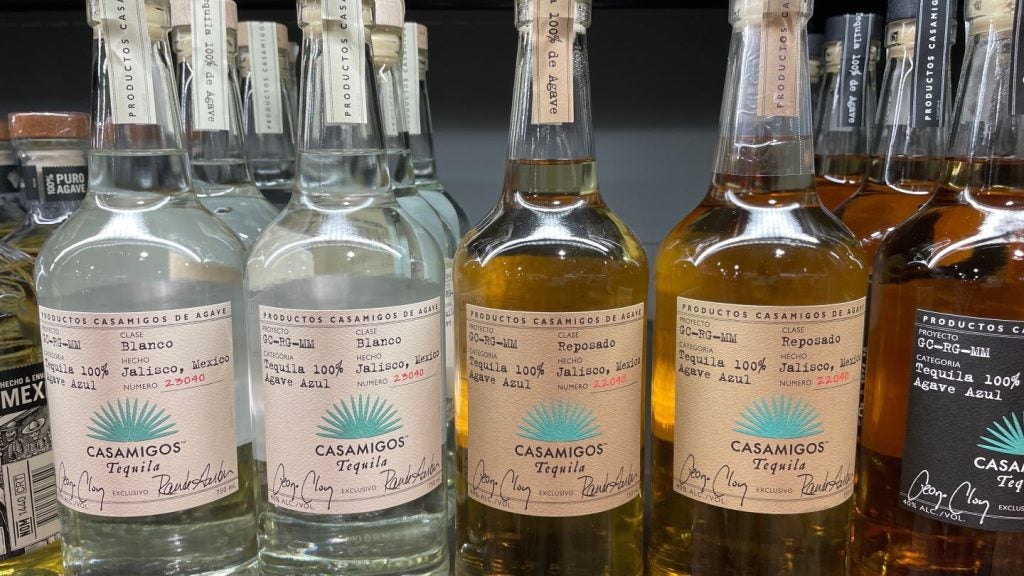
Sir Dave’s description of that as “both a challenge and an opportunity” quickly became a repeated refrain. In RTDs, he said, Diageo had suffered a “loss of focus”, seeing its category share figure of 25% in the early 2000s erode to less than 10% now. Highlighting the growth of higher-abv offerings, Sir Dave said: “We have work to do.”
This thinking on both Tequila and RTDs is connected to his conviction that the problems facing spirits in 2026 are largely – but not exclusively – linked to cyclical disposable income pressures. Amid all the talk of GLP-1s and shifting consumer attitudes to alcohol, Sir Dave highlighted the economic pressures on consumers in the US (and elsewhere), which translate to fewer serves per consumption occasion. In other words, people haven’t stopped drinking; they’ve cut back and they’ve become more selective and value-conscious.
If we were to sum up the overall theme of the presentation, it would be that premiumisation – the mantra of the spirits market for the past generation or more – has not ended but shifted into a new phase that’s much more nuanced. Citing the example of the UAE, Sir Dave showed how Diageo’s team there had cut prices to target volume gains. Margins might be tighter, he said, but absolute value creation was greater.
The new CEO reserved his most damning criticism for Diageo’s customer service, using phrases like “very poor”, “not acceptable” and “not fit for purpose”. Meanwhile, the “very loud” internal feedback indicated a need for greater clarity within the business, alongside improved time cycles and greater agility – a nod, perhaps, to reports last week that Sir Dave is planning a streamlining of Diageo’s senior management structure.
It was a thoughtful and almost philosophical debut in the Diageo hot seat
For the moment, the most concrete step was the reduction and ongoing change to Diageo’s dividend – a necessary step, he said, to free up funds to invest in restoring fortunes in North America and in boosting capacity for Guinness, a brand for which Sir Dave clearly has a lot of time.
All in all, it was a thoughtful and almost philosophical debut in the Diageo hot seat, and certainly not one that will reinforce the new boss’s ‘drastic Dave’ moniker. That sense of restraint – rather like the travel itinerary that the incoming CEO has faced – is surely a reflection of the size and complexity of what Sir Dave called the company’s “turnaround journey”.
That journey began this week with one single step but it will be some time before Sir Dave Lewis and his colleagues can even catch sight of their destination, let alone reach it. If you’re in any doubt about that, take a look at Diageo’s share price: down almost 15% in the hours following this results announcement.


