

As we all contemplate what kind of year 2026 will be for spirits – after tariffs, conflict and macroeconomic gloom this year, can it be much worse? – it might be instructive to consider the recent pronouncements of a couple of the industry’s leading figures.
At a Bernstein conference in Paris earlier this month, Pernod Ricard chairman and CEO Alex Ricard highlighted the company’s considerable presence in emerging markets: whatever the recent problems in China, there is still the promise of India, plus South East Asia, Türkiye, South Africa and Nigeria.

Access deeper industry intelligence
Experience unmatched clarity with a single platform that combines unique data, AI, and human expertise.
But I was most struck by his reported thoughts on recovery in developed markets, which he said would be built on market share gains and innovation, and in the US, where the focus would be on “tactical pricing adjustments aimed at volume recovery” (I think we can read around the jargon pretty easily on that one), plus a strategic focus on key brands.
That equates to a tacit acknowledgement that trading conditions in these countries are unlikely to improve in the near future, no matter whether those conditions are short-term and cyclical in nature, or something longer-lasting.
Then there was Barclays’ response to Brown-Forman’s recently-announced second-quarter results, when net sales declined 2% on an organic basis. “There was nothing from yesterday’s conversation [with CEO Lawson Whiting] to suggest the business (or category for that matter) is going off the rails,” Barclays said.

At the same time, however, there was an acknowledgement from Whiting that, given current market conditions and declining consumption rates, “it’s tough to say we’re going to advertise our way out of this”.

US Tariffs are shifting - will you react or anticipate?
Don’t let policy changes catch you off guard. Stay proactive with real-time data and expert analysis.
By GlobalDataHence Brown-Forman’s focus on improving its route-to-market in the US, with distribution changes appearing to have a positive effect on trading – relative, at least, to rivals such as Diageo.
In other words, it’s a complex and challenging time for industry operators – but one that is not without its opportunities for aged spirits brands, from emerging markets to travel retail and beyond.
Winning at the innovation game
A disproportionate amount of growth comes from innovation. Not so much entirely new-to-world products, which suffer an alarmingly high failure rate, but line extensions, limited editions and the migration of existing brands into new categories.
The temptation can be to flood the market with a never-ending stream of new releases but, as historic examples such as flavoured vodkas or hard seltzers illustrate, this can seriously backfire. Better, then, to employ what I’d call judicious or targeted innovation.
Jack Daniel’s provides an instructive example here. I recall that, when the brand’s first flavour, JD Tennessee Honey, was launched back in 2011, the company was at pains to point out that it wouldn’t rush to launch a succession of new flavours, despite the spin-off’s obvious early success.
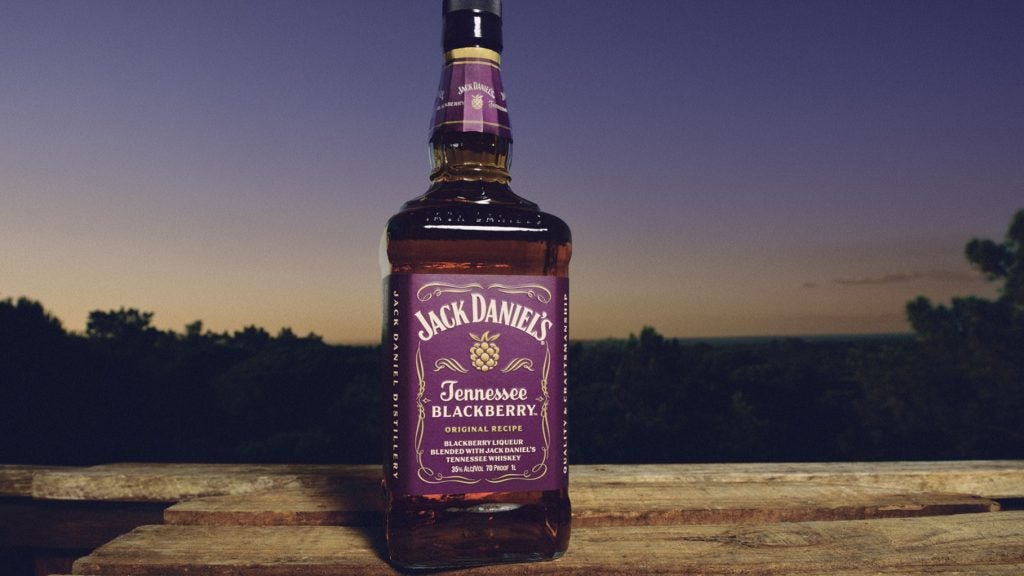
Fast-forward to today and the latest of a highly selective run of flavour iterations, Jack Daniel’s Blackberry, is said to be outstripping expectations in the US, while recruiting new-to-Jack consumers in the UK. If you can innovate within an existing franchise without cannibalising your own sales, that’s a winning formula.
Travel retail redux
At a difficult time for the upper end of the market – the super-premium-and-above price tiers – the resurgent travel-retail channel provides a much-needed shop window for luxury products. While spend from Chinese travellers still has a way to go, the airport trading environment serving Indian consumers is moving fast to catch up.
The keys to success in duty free today are broadly similar to those across the luxury, aged-spirits spectrum: where a few years ago it may have been enough to launch a beautifully packaged product with an appealing age statement and a hefty price tag, well-heeled consumers are now looking for a little substance to go with the style.
Before parting with their cash, they want solid reasons for doing so. That means a back-story and/or experience that engages them, catching their attention and building an emotional connection that, even in today’s notoriously fickle consumer landscape, can last well beyond the moment when their flight is called.
Scotch: the benefits of scale
Scotch whisky is facing arguably its most challenging period in 40 years, with a number of established distilleries pausing or reducing production and several recent start-ups struggling to stay afloat. Diageo’s recent cessation of malting at Roseisle and Eden Mill’s rescue from administration are merely the latest symptoms of a more general – and worrying – malaise.
In general terms, however, the industry has built such a globally diversified position of strength since the grim days of the whisky loch in the early 1980s that it will survive its current difficulties by doing what it’s always done: evolving in tune with the times and adapting its offer to a new generation of consumers.
But there’s no room for complacency. Distillers may be starry-eyed about the lucrative promise of India, its potential redoubled by the tariff cuts enshrined in the UK free-trade agreement, but – as we’ve said before – they will face keen competition there from the likes of the US, Ireland and India itself.
Scotch’s advantage over all of those – and over whiskies from other origins such as Japan, Taiwan and England – is its geographical reach. The downturn in the US and China may have hit distillers hard in the past few years but, beyond India, they have positions of strength across Europe, Asia-Pacific, Latin America and pockets of Africa. Whatever the short-term challenges, that’s a massive plus for the category.
Cognac’s quandary
Such has been the ceaseless conveyor belt of new releases from Scotch distillers over the past decade or more, with single malts to the fore, that some in the industry feared that they might be overwhelming the market and confusing consumers.
Not so with Cognac. The belated attempts at real, substantial innovation from the big houses in recent years have had a “too little, too late” air about them; when trading conditions in the category’s two key markets of China and the US deteriorated, there simply wasn’t enough going on to keep consumers engaged.
Over the years, there have been some efforts from leading players to open up fresh markets, but the Cognacais are now reaping the whirlwind of their historic over-reliance on China and the US. There are signs of promise in Africa and Latin America, but little sign of a renaissance in western Europe. In other words, not enough to even begin to replace the volumes lost in the east and the west.
Crises, of course, can spawn creativity. The answer to Cognac’s problems is likely to have many strands but it surely must entail a change in approach by the industry’s ‘big four’ houses, swapping the historic emphasis on big-brand glitz for something with a little more substance.
This might involve the kind of storytelling around provenance and heritage, with innovative products to match, that smaller houses and farmer-distillers have been doing so well for decades. Whatever the prospective solutions to its current travails, the industry response over the coming months and years will be interesting to watch.

