

Spanish wine group Vintae has been building up its size over the last 12 months through M&A.
Nearly a year ago, the group took back ownership of the El Bandarra vermouth brand from Diageo.
Go deeper with GlobalData


Discover B2B Marketing That Performs
Combine business intelligence and editorial excellence to reach engaged professionals across 36 leading media platforms.
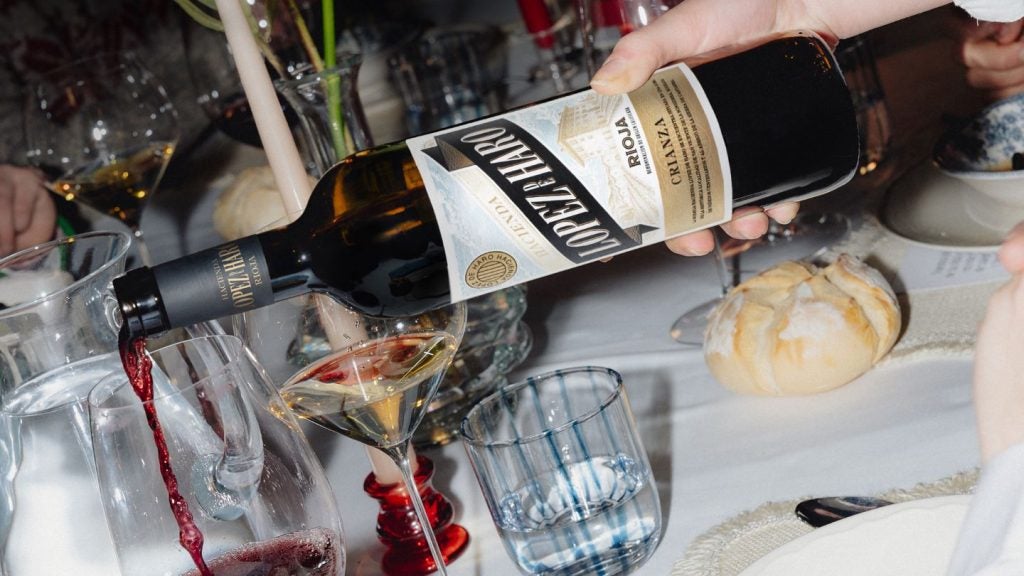
Vintae, though, is best known for its range of Spanish wine brands, including Bardos, Matsu and Hacienda López de Haro.
Last week, the company finalised a deal to acquire local peer Bodegas Riojanas. The deal was carried out through Gevisa Wine Capital, Vintae’s holding company.
Vintae signed a restructuring plan for Bodegas Riojanas in May to save it from insolvency. The plan received judicial approval earlier this month.

Bodegas Riojanas holds Riojan wine brands including Monte Real and Puerta Vieja. It has wineries in other parts of Spain, such as Viore in Rueda, Torreduero in Toro and Veiga Naúm in Rías Baixas.
Vintae achieved €44.6m ($51.3m) in annual turnover and €7.8m in EBITDA in 2025. The company exports around 45% of what it produces, selling into markets including the US and UK.
Just Drinks sat down with Vintae CEO Ricardo (Richi) Arambarri to explore how the group plans to grow the Bodegas Riojanas business and his views on trading conditions in wine.
Fiona Holland (FH): Why did Vintae embark on the Bodegas Riojanas deal?
Richi Arambarri (RA): We have been looking at making an acquisition in the last few years. I mean, we are never in an active position of looking for acquisitions but we are always listening.
We have been always thinking of trying to strengthen in the regions where we already have a presence.
For example, the purchases of El Viore, Torreduero and Veiga Naúm: the three of them are regions where we have already been present for many years and they strengthen the positioning in those regions. That is one of the reasons.
But the main one really, is that in all this research for value, for building prestige, trying to become one of the greatest producers in Spain… Bodegas Riojanas, the centenary winery founded in 1890, makes sense.
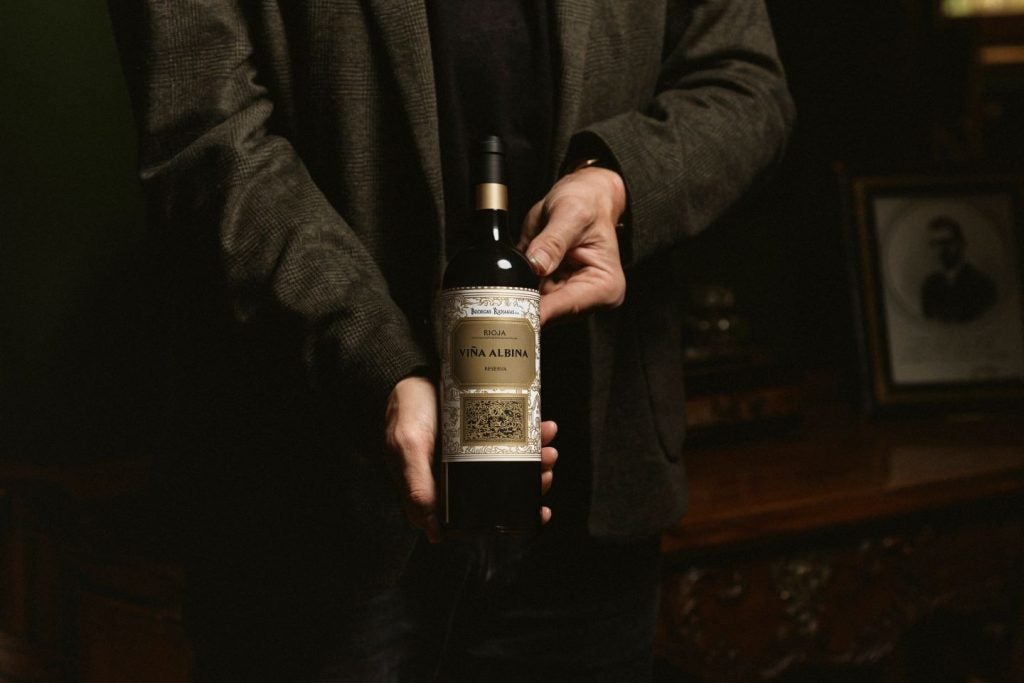
For us, it is one of the founding wineries of Rioja. It has maintained a very prestigious image for over a century and it made sense for us to fortify our position in Rioja towards the high-end of classical brands.
FH: By moving towards value, do you mean moving towards higher-priced, better quality wines?
RA: What I mean in the strategy towards value is to improve quality, improve the wines. Sell higher value wines… so not necessarily selling more bottles but selling better bottles and with higher value.
FH: In the short term, how do you plan to grow Bodegas Riojanas’ sales?
RA: For the moment, the priority is to organise the group. The group has been in a very difficult financial situation for the last few years, so we are trying to recover the normal running of the business. In terms of working with the suppliers of bottles, corks and all that, with grape suppliers, organising the team.
Bodegas Riojanas has been losing a big part of its team in the last few years due to this instability. Right now, these next six months, in 2026 … [the aim] is to put things in order and try to analyse in [depth] how everything is going on.
In 2027, the idea is to adapt these wineries – not just Bodegas Riojanas but the others too – to be inside the universe of Vintae. That is the second challenge.
For the moment, the priority is to organise Bodegas Riojanas
Once all this is happening, we need to look for synergies in all areas: logistics, production, central services. Of course, sales – both in the national market and international sales. Once we get to this point, it will bring a lot of synergies for the whole group.
The main focus in terms of brands is the more prestigious brands of Bodegas Riojanas, like Monte Real and Viña Albina Especial and of course Puerta Vieja.
FH: Where are the Bodegas Riojanas brands sold? Is it mostly in Spain?
RA: It is curious because when the news of this acquisition happened, many of our international partners wrote to us saying: ‘We were dealing with Bodegas Riojanas 15, 20 or 25 years ago’. It is really an international brand. But the truth is in [recent] years they have been losing international distribution. Bodegas Riojanas still has some strong distribution in a few markets but it does not have the international distribution that Vintae has.
Now [we have] the duty of repositioning the brands and starting to rebuild these prestigious, ancient brands to the current world.
In terms of the national market, the reality is different. They have maintained a stronger position but have been focused too much on retail. Now the idea is to recover sales in the high‑end on‑trade.
Thirty or 40 years ago, Bodegas Riojanas was one of the top wineries in Spain. They still remain being a very prestigious winery but the position 30 or 40 years ago was even better. The idea is to recover in the long‑term, so we know this path will take time and years. We are young; there is no rush to recover this position.
FH: Are you looking to grow the brands in the on‑trade?
RA: Of course, we will try to maintain the position in retail; we do not want to lose it. But the idea is to position [Bodegas Riojanas] in a different segment of more high‑value wines in the long term. This is going to be a long transition but the idea is to go towards the direction.
FH: Outside Spain, would you follow the same strategy?
RA: Not necessarily. Because internationally, there are some markets where the on‑trade is almost nothing. Spain is very different because 50% of the market is on‑trade but it is not the reality elsewhere.
The strategy we organise always in Vintae, it depends on the markets where we go. But, anyway, the idea is to look for prestige and to a higher positioning.
FH: When you announced Vintae had signed the restructuring plan to buy Bodegas Riojanas, you said Rioja was “going through a period of transformation and uncertainty”. What did you mean?
RA: Since Spain started to open to the world, you know, when it started to liberalise, Rioja has continuously been growing, mainly in value.
We in Rioja – and probably we at Bodegas Riojanas – have to forget about the low‑end business
Right now, the global wine market is declining, as you know, and it is declining especially in reds – where Rioja is positioned. That situation remains.
What is happening in Rioja right now is that Rioja has… talented people: wineries, large, medium and small wineries doing great things. But the reality is that Rioja is still falling.
Quality is the most important thing. Value is the path. As Rioja – and probably we at Bodegas Riojanas – we have to forget about this low‑end business [lower quality, price]. That is not our business anymore.
The idea is really to build the quality, build the brand and build the prestige to try to gain in value. This is the transformation: volume in general is falling but there are opportunities if we do things right.
FH: Where do you see growth opportunities for Rioja wine? You mentioned red wine is what the region is focused on. Would you look to increase Bodegas Riojanas’ presence in white wines?
RA: Bodegas Riojanas used to make a lot of white wines in Rioja. In the past.
At some point they stopped. [Later] they started again with some brands but in the low end. I think there are opportunities in white wines in Rioja and I also think there are opportunities in red wines if you do things right.
Right now [we are in a moment] where, not just in Rioja but also in Piedmont, Bordeaux and Burgundy, the classic wineries are in a hype. These historical brands, not all of them but there is always an opportunity because there are wine lovers.
Even [though] consumption is going down, my point of view is there are more wine lovers – people who buy good brands, like to keep wine and enjoy wine. You have to be part of this club. Bodegas Riojanas used to be part of this club. Maybe today it is not as part of it as it used to.
FH: By ‘wine lovers’, do you mean consumers who follow producers and are aware of different styles?
RA: Consumers who love wine. High‑end consumers who might love natural wines from the south of France at the same time as they are crazy about enjoying the historical, ancient brands of Tuscany or Bordeaux.
In Rioja, we have a little bit of everything. We have small vignerons, viticultores, their fathers used to sell grapes and who are now making their own wine. They are doing amazing stuff and having success even in Spain and internationally, of course on a small scale.
And the historical brands. The ones that do great have more demand than the number of bottles [produced]. If you do things right, there is always a space in the market.
FH: More broadly, how do you see global trading conditions for wine at the moment?
RA: In a very difficult moment. That is the truth. I think we have two big problems. Probably the most important is we have had some enemies towards alcohol in general and wine specifically. [People saying] not a single glass of wine is good for your health, and so on.
This does not make sense with our history, with the Mediterranean diet and that Spain is one of the regions with the longest life expectancy.
Of course, there are many factors apart from wine. But we cannot say that in regions that love wine and where wine is part of their history, wine is bad for your health. This is, of course, the personal view of Richi Armbarri. But when people say every drop of alcohol is bad for you, it is making global wine consumption [decrease], mainly in the Western world. This is a problem.
Inflation, it’s a big problem. Wine every time is more expensive. People’s incomes are being reduced in the main historical markets like Europe.
The international difficulties: duties in the UK, tariffs in the US, global uncertainty, like the reality of war in Iran, the increase of cost.
The wine business. We are not a very big industry but very international. Any international uncertainty, we suffer from it.
FH: Are you in talks to buy any more wine businesses?
RA: For the moment, we are okay. This acquisition is going to take a lot of effort, a lot of energy and a lot of strength. We have to be focused.
FH: Aside from Bodegas Riojanas, over the next 18 months how are you looking to grow the other brands within Vintae?
RA: We are dedicating a lot of effort in markets where we see a lot of potential, like Latin America, for example.
At the same time, with tariffs around, we always think that North America – Canada, of course, and the US too – even if it is a complicated market with a political situation that is not positive for us, still has a lot of potential for Spanish wines.
Probably now that we have won the World Cup, even more people will think about Spain. We will see.
We are very strong in Spain. We are present in all the touristic areas with our brands. All of that is continuous work.
Whites and sparkling wines, we think, are a long‑term trend. With this purchase we are stronger in Rueda [with Viore] and Rías Baixas [Veiga Naúm], which are two of the most important white wine regions in Spain. There is still a lot to do on that, but it is continuous work.
FH: Looking specifically at Bodegas Riojanas and its subsidiaries, are there international markets you want to take those brands into, or see opportunity?
RA: It is too early for us to know. Bodegas Riojanas has been very strong in the past in markets like the UK, Ireland – it is still very strong, North America. These will be the main focus and probably also Mexico, other markets like this. Really, the markets where Bodegas Riojanas has been present in the past. We will have to investigate. This is what we think from what we heard but now we have to learn and analyse properly.
FH: Does Vintae intend to increase the proportion of its exports in the next 18 months? You export about 45% of production?
RA: It is around 45–50%; it changes every year.
Not necessarily that we want this percentage to grow against Spain. We still think we have enormous potential in Spain and in Spain right now – in comparison with other countries in Europe – the situation is better. People are still enjoying life and going out. It might change in the future because inflation is making everybody a little bit poorer. This is a reality. At some point, this will stop.
We always try to divide our efforts in halves. Not necessarily taking resources from the national market to the international markets. Every one of the markets has its own resources.
FH: Are there new markets you are looking to enter with Vintae’s brands in the next two years or so?
RA: It is always in our eye. India, for example. Now it seems that it is opening in terms of taxes on imported wines. This is always in our mind.
Sometimes it is a long process to find the right partner, so we never try to [move] too fast because sometimes it makes you take wrong decisions.
In Asia and Southeast Asia, we have been dedicating trips from our own team to follow the process there. Some of those markets, because of the tradition, they have much more a relationship with countries like France, Italy or Australia. They have less tradition and less connection with Spain. We have to divide our efforts and our budget in the whole world, so it is [about] always trying to do a little bit of everything, to be honest.
FH: Does Vintae produce non‑alcoholic wines and is that something you plan to increase your focus on?
RA: To be honest, we are going to focus more on Bodegas Riojanas than on non‑alcohol.
My point of view on non-alcohol is that the segment will grow, of course, and will change from a niche to a segment. The thing is there has been so much noise that many players have started to make non‑alcoholic wines. The market is being divided [between] more players, more wineries.
We recently released a sparkling non‑alcoholic wine. We used to have a white and a red and now we have a sparkling. The brand is Le Naturel Zero Zero. It is okay, it is doing well.
I think it [non‑alcohol] will become a larger segment but it will be just a segment.


