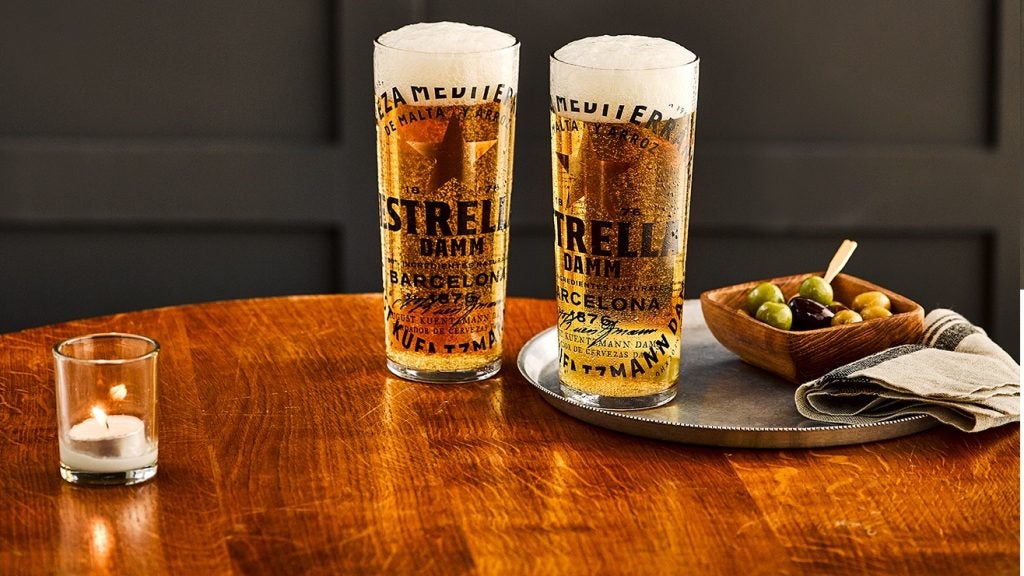

In October, Damm reopened its Eagle Brewery in the UK town of Bedford. The Spanish group acquired the facility in 2022 from Carlsberg Marston Brewing Co., making the site the Estrella Damm brewer’s first UK production site.
The £70m (now $95m) investment at the time almost doubled capacity to 1.8 million hectolitres a year and gave Damm the ability to produce drinks for its “beyond beer” portfolio and soft drinks.
Go deeper with GlobalData


Discover B2B Marketing That Performs
Combine business intelligence and editorial excellence to reach engaged professionals across 36 leading media platforms.
Aside from selling brands like Estrella Damm, Damm Lemon and a growing range of non-alc varieties in the UK, the group also manages the local distribution of Japanese beer brand Kirin Ichiban and distributes local craft brand Northern Monk in the on-trade. The group also does contract manufacturing for soft drinks producers. In all, the UK makes up 30% of Damm’s global sales.
Just Drinks sat down with Luke White, the managing director of Damm’s UK business, to explore how the business is planning to expand in what is a low-growth market for beer.
Fiona Holland (FH): The Eagle Brewery is Damm’s first brewery in the UK. Why was it strategically important for Damm to have a brewery there? Given it is relatively low growth market for beer, why is the company investing in this market?
Luke White (LW): Our brand has been in the UK for over 25 years. Charles Wells were one of the original distributors of the Estrella Damm brand in the UK and Eagle Brewery was their brewery, so we had a long affinity with it.
When it did come up for sale, whilst we were looking at various options, it made a lot of sense because we knew the brewery very well and how quickly that we can integrate it within our business.
In terms of bigger strategic reasons, the UK is arguably the most competitive beer market in the world. It is one of the most mature beer markets there are but also not [just] beer, beverage as well. Innovation in beverage, especially soft drinks, is quite an exciting place to be right now.
But the other strategic point is, you know, we’re an enormous company in Spain. When you look at… all of our branded beer portfolio that is sold outside of Spain, more than 50% of it is sold in the UK, so the UK is an important market and it’s the biggest market for Estrella Damm outside of Spain.
Despite the category declining, there are two categories that are doing very well. Some people call it ‘super premium’ or ‘world and discovery’ but that sort of super-premium, higher end and no-and-low [area]. Our portfolio is completely focused on those two categories.
We announced in our reopening in October that the UK would become essentially the global hub for our international business to test and learn new products and new flavours and new processes and technologies.
But [we said we’d] also open the accelerator hub for smaller fledgling brands, either for us to distribute for them, or for them to tap into our technology and our manufacturing resource so that we can help build their brand and build out our portfolio.
When we did all the investment for Bedford, it’s not just a brewery now. We have a full soft drinks capability within the site as well to produce ‘beyond beer’.
FH: Does the Bedford brewery produce all the Damm brands?
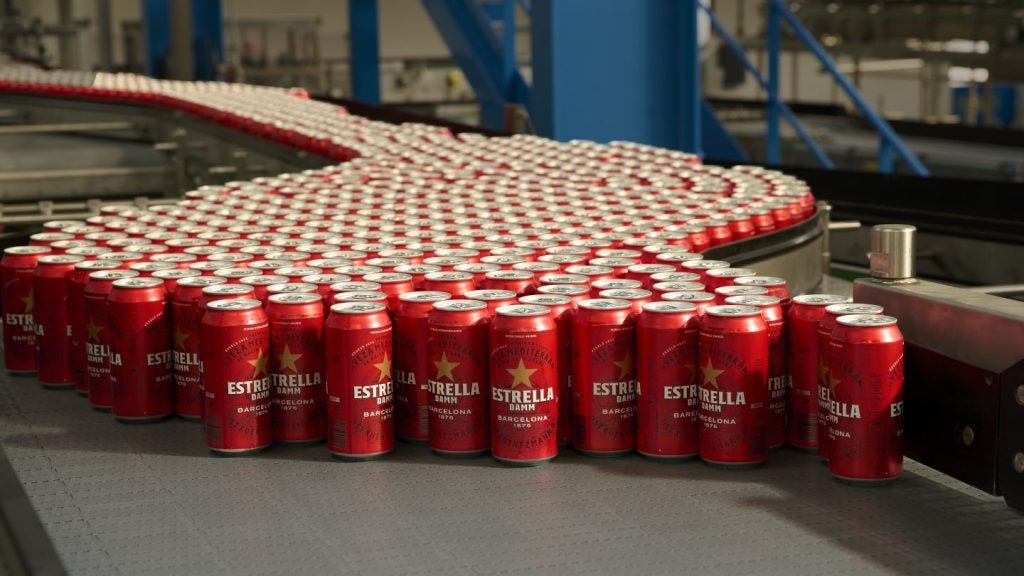
LW: We brew a lot of beer there. We’re still importing some beer. We also blend our own beer as well but quality is at the heart of everything that we do. We make sure that there are really strict tasting panels and processes in place but we still use our Spanish business to bring some beer in as well, just to always make sure that we get the best product possible. But we also are making beers for other people, so contract manufacturing is quite a big part of our business as well.
FH: With the brands you make at the Bedford brewery, so with Estrella Damm, for example, is that a mixture of being fully produced in the UK and blended?
LW: To be honest, a lot of our brands are still a mix. Estrella 0.0 is all made in Spain. Estrella Damm is some is UK, some in Spain, some is blended but it’s consistent across the board.
I’ve answered questions before around how do we go through the process of making sure it was right? When we took over the brewery, we spent 18 months brewing and brewing and brewing and brewing to make sure that we could match. There’s no difference in recipe. It’s exactly the same recipe, same raw materials. It’s just a slightly different abv to what we have in our in our domestic market in Spain.
FH: Does Damm have any plans to invest further in the Eagle Brewery?
LW: Phase one finished in 2025. The reality is, because of the rate we’ve grown, we’re already having to bring phase two investment forward. We’ll continue to invest quite significantly over the coming years. Our capacity has moved up to two million hectolitres and we want to fill that.
FH: How would you describe trading conditions for beer in the UK?
LW: There is a lot of doom and gloom in the UK. If it’s not the war, it’s the economy, it’s the Government. We’ve got to remember, we’re in arguably one of the most legislatively restrictive industries. Our duty and excise on alcohol is the highest in Europe. It’s super regulated so it is really tough here to do business but, if we didn’t have a belief that we could grow and succeed here, we wouldn’t have set up in the first place. We are enjoying a really healthy period of growth at the minute but we’re also very aware that generally, the market is having a tough time.
Conditions are generally tough, though and it’s just going to be how do we work with government to overcome it? We’ve seen the PRN [packaging recovery note] and EPR [extended producer responsibility] impacts last year, which there’s still been questions over. We’ve obviously got DRS [deposit return scheme] coming up in the back end of 2027 so, you know, it comes a point in time of how much further can we go? Because it is already very, very highly regulated.
FH: In terms of consumer trends within beer, whether that’s in world lager or fruit flavoured beers, no-and-low, where are consumers leaning?
LW: The word premiumisation has probably been overused for last 25 years. Historically, a lot of people used to talk about premiumisation as an abv index but the reality is now I think premiumisation is around quality and price.
We’ll see more brands refresh, find their origin story and focus on their authenticity
World lager, I think we’ll see innovation slow down a little bit in that space because there’s a lot that’s gone on there. What I think we’ll see happen is more brands sort of refresh and, you know, really find their origin story and focus on their authenticity.
No-and-low is super exciting. In Spain, the market is 15%… in the UK, it’s 1.5%, so there is a lot of growth still to come from that category. Fruit is an interesting one, because technically, the category has been around hundreds of years. You go to Eastern Europe and fruit 0.0 is quite a big thing in the likes of Poland, etc.
For me, the category has been around for a while but it’s one that I think people are definitely keeping an eye on. Just look at the success of Jubel and how they’ve grown. As for Damm Lemon, I think we’re 126% up in the off-trade currently and the fastest growing flavoured lager. It’s also a very easy category to become quite distracted with and that’s where quality of product has to be absolutely second to none in that space.
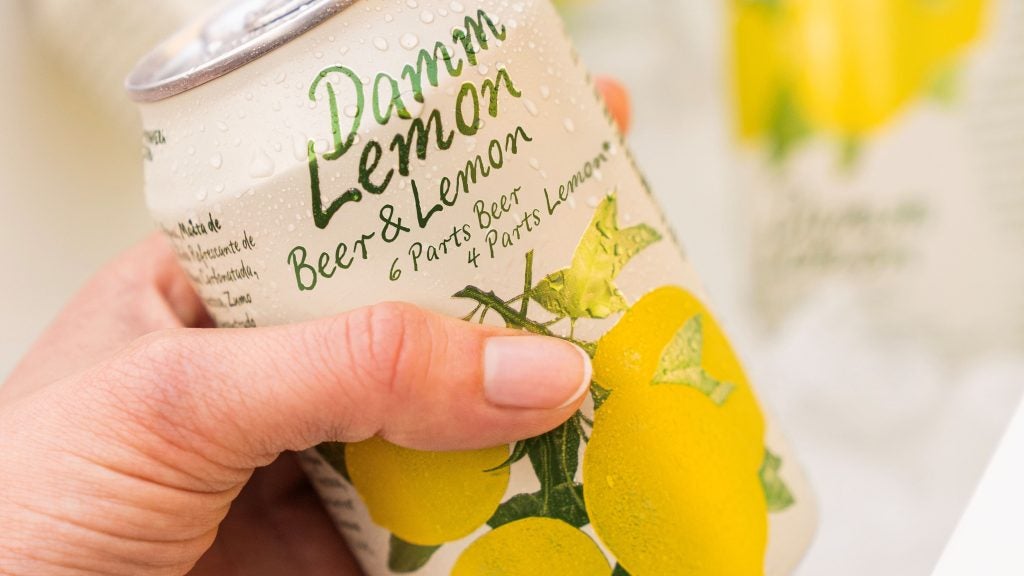
One of the drivers around beer declining is that there’s been [fewer] consumers coming into beer and, actually, any innovation in no-and-low and fruit is only going to be good for the category because it will invite new consumers in. We see that with a higher index of female consumers on the likes of Damm Lemon.
What I find super exciting to watch at the minute is soft drinks, the innovation and evolution of things in that sector is phenomenal. Three years ago, functional wasn’t really a thing.
If the quality of the product is there, I think it could be the way that that things go. If you go to the US, the amount of soft drinks that have protein in now is phenomenal. I think that might be one of the next things here.
If you look at the whole use of supplementation… supplements are now one of people’s priorities in terms of where they’re spending their cash because they want to be fit and healthy and they want to be more balanced in what they’re doing. This is why we’re now starting to see supplementation make its way into the drinks sector. I don’t know if it will fully roll that into beer but, if it can invite new consumers in and it’s going to help support the growth of the category, then it’s only going to be good for the industry.
FH: Within soft drinks, are you looking at functional drinks at all?
LW: We make drinks for other people in the UK. We can’t mention them unfortunately but we are making soft drinks across multiple categories for people. It’s something we’re certainly keeping an eye on. I think we were quite open in October when we when we reopened [the brewery] that we wanted to be a total beverage company.
We will probably spend our time focusing on, one, does it fit our portfolio of being super premium and high quality, etc. and two: is it in a category that’s got growth behind it? Functional is one definitely that we’ve got our eye on but we’re taking a bit of time to make sure that we make the right choice in terms of what our portfolio evolution looks like for the future.
FH: The non-alc beer portfolio is an area Damm has focused a lot of its time on and, in the UK especially, over the past year or so. How are you looking to grow in that area over the next 12 to 18 months?
LW: First and foremost, we still have a lot of room to grow in the brands that we’ve got. Spanish beer continues to grow. Japanese beer continues to grow [Damm distributes Kirin Ichiban in the UK]. Although we’ve seen craft decline as a category. if you look at the strength of Northern Monk, who we have a partnership with, they’re seeing some fantastic growth as well. It comes down to provenance and quality of product.
First off, we need to continue focusing on what we’re doing now with our current portfolio… the next part then is looking at how do we complement that and what are the gaps that we have in our in our portfolio? We are looking at how do we fill those gaps? Some will be beer, some will be soft drinks.
FH: We’ve heard a lot about the overall non-alc category growing rapidly, especially in beer, but have you seen any evidence this year of growth slowing a bit?
LW: In the data that I see, I don’t see no-and-low slowing down. If anything, it’s going to continue to accelerate. The percentages of the growth year on year might slow down a little bit but that’s because the category base is becoming bigger.
Rather than Dry January or Stoptober, people are just being more moderate across the year
In reality, what we are seeing happening is that, rather than Dry January or Stoptober, people are just being more moderate across the year, as opposed to just two very big moderation periods.
FH: Within non-alc beer in the UK, there are a lot of independent brands. How do you think the category might play out? Do you think big brewers will dominate that space?
LW: Consumers are brand loyal and the UK has a distribution of the biggest brands in the world. The data is there, right? There’s a direct correlation of a brand extension of a main mother brand to a 0.0 brand does work and that’s because people want to taste, feel, touch the mother brand but they want to do in a way that where they can moderate, or they’re not drinking, or they’re driving, whatever it may be.
At the same time, though, we shouldn’t write off independents. We’re independent ourselves. Look at the likes of what Lucky Saint have done and how they’ve grown as just an independent brand have done, how Big Drop have done, as a truly independent brand.
We’ll see a lot more independent guys come through. We’re already seeing it, so the likes of Days. As I said, there’s loads of growth left in that category. The more competition, the better choice for [the] consumer.