

As interest for ‘better-for-you’ energy drinks builds in the US, Florida-based Odyssey Functional Energy believes its beverages (containing green-tea caffeine and ingredients like lion’s mane, cordyceps and L-theanine) can provide consumers with a sustained boost throughout the day – and build a sustainable business in a growing market.
The company, set up by Scott Frohman in 2022, sells its drinks – one range with 85mg of caffeine, another with 222mg – in 17,000 stores in the US and is targeting another 4,000 this year on the back of a new name and new packaging.

Discover B2B Marketing That Performs
Combine business intelligence and editorial excellence to reach engaged professionals across 36 leading media platforms.
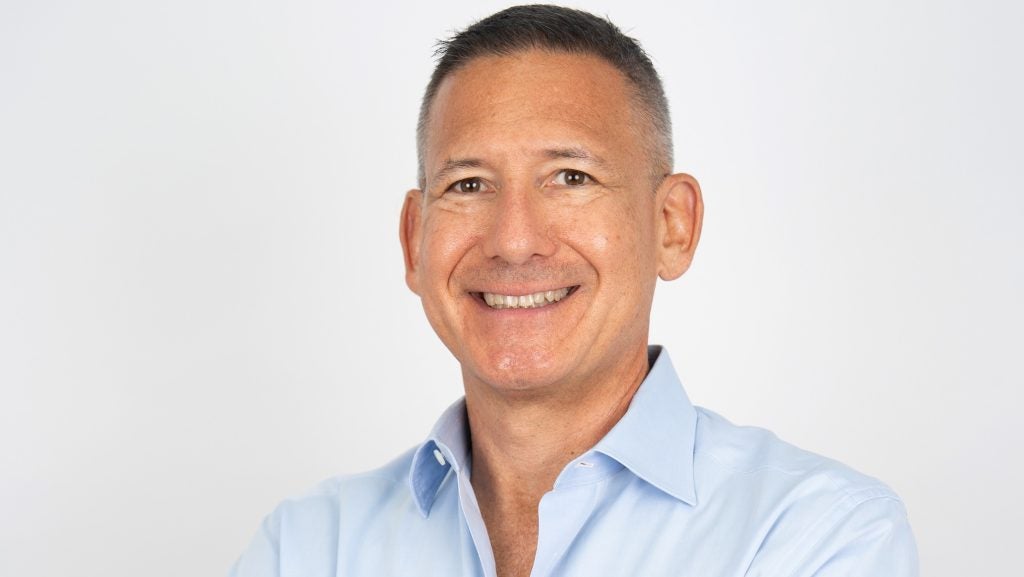
Frohman sat down with Just Drinks to discuss his bid to make the brand “more mass-market” and why consumers don’t want their drinks to be “hocus pocus”.
Dean Best (DB): What were the reasons for the rebrand from Odyssey Elixir?
Scott Frohman (SF): When I first started the project, I needed something to get the pioneer-type people into the product and that’s where it started off as Odyssey Mushroom Elixir, with the sacred geometry cube [on the branding] being the Metatron cube. The pioneer-type people bought the drink, liked the drink and then we started to morph out of just natural [stores] and into a lot more mass-market and bigger, national footprint-type opportunities, whether it was Central Market or Erewhon or Wegmans. That started to develop into us looking for a more mass-market type of appeal.
I said ‘Let’s get away from the sacred geometry. Let’s make it more approachable. Let’s get the name Odyssey, not the Metatron cube, front and centre.’ Then that led us to ‘functional energy’. People relate to ‘functional’.
DB: Aside from the early consumers of your drinks, as you looked to try to grow the distribution of the products, were shoppers not really understanding the potential benefits around cognition and other attributes and you wanted to give the brand a broader proposition?
SF: Yeah, I think that elixir – what’s an elixir? We went from Odyssey Mushroom Elixir to Odyssey Elixir. We started with an 85-milligram caffeine [drink]. As we went, a lot of people were buying our drink with either a Celsius or a Bang Energy with the higher caffeine and they were like ‘We love the way your drink functions. We love the ingredients. We love the nootropics but we wish it had more caffeine.’ That’s what led us to developing the Odyssey 222 but with no taurine. The way our drink works is that when you put in the lion’s mane, the cordyceps, a little L-theanine, it rounds out the caffeine. You get a longer sustainable energy without the crash and the jitters and you get this cognitive and mood-boosting effect.
That’s really the lane that we’re playing – as an everyday energy drink, an all-day energy drink that gives you energy to function throughout your day and not just the spike, the wiring you out and the crash. That’s what made me want to do the drink in the first place.
DB: Did the rebrand also involve changes to recipes or the launch of more products? Or were the changes more around the packaging and the visual identity?
SF: We haven’t changed anything in regard to the actual functionality. We use a very high potency, milligram strength, of the lion’s mane, the cordyceps, the ginseng, the L-theanine. We’ve constantly been evolving on the flavour. This isn’t [just] caffeine, taurine and sucralose with flavouring. We don’t use any artificial flavouring. But, to play with the lion’s mane and the cordyceps, with the L-theanine and the ginseng, it takes a bit to dial this thing in. We’ve sweetened it with monk fruit. We’ve been constantly at the flavours and getting the flavours dialled in and we’ve done a great job. Now we’re looking to go really more mass market.
DB: To become more mass market, how will you look at your pricing?
SF: We are slightly higher than other typical energy drinks in the market but we’ve been able to get that and people have been willing to pay a premium for that. We’re not playing in convenience yet. We have margin to work with, so when we want to do more in convenience, we want to get a little bit more aggressive, we can do it. We feel good about our margins, so I feel good about our ability to compete.
DB: The market for energy drinks in the US has had a great run, growing solidly over the last decade or so. That growth rate can’t continue forever but, within the overall market, the better-for-you segment is gaining momentum. How do you feel about the intensifying competition in the better-for-you area? How can Odyssey look to increase the number of drinkers it wins over?
SF: I think I look at the functionality. How does this move you? That’s what makes everything different from everybody else. You drink one of these and it’s different. You’re like ‘Wow, I feel so much more alert. I feel so much more aligned. I feel so much more present.’ That’s what’s going to make the difference.
At the end of the day, people are going to buy what really works well for them but tastes great and functions great. We put out a great product. It’s not because we had the most amount of money, it’s not because we had all the A-list celebrities. We focused on product first. We focused on flavour and function. That’s why we’re now in over 15,000 doors. It’s never been a better place, better time.
DB: As more consumers come into the product area, are they asking questions about the ingredients list, or about whether the ingredients deliver the functionality that brands say they do? Have you got any evidence the drinks do have the functional benefits you say they have?
SF: It’s a great question. And the answer is we need to do a clinical trial. We need to go substantiate that. I think that’s going to be a big, big feather in our cap when we can come out and say ‘clinically proven’. Why I think I could say people are finding it’s working is when they drink the drink, the testimonials go through the roof. We do samplings all the time, they walk around the store, they’re drinking the drink, they come back 20, 30 minutes later and they go ‘This is unbelievable. I feel great. I can’t believe how clear everything is.’
By the way, lion’s mane, it started to get more popular by very pioneering people, 30, 40 years ago and, in the last ten years, it has become very popular. What people don’t realise is we put in 1,500 milligrams of an 8:1 extract. It’s dried, it’s ground, it’s put into the capsule. We’re basically extracting out all the fibre and are left with the extract, the concentrate, that really is highly potent. What we had to do to win this game was to put enough potency in so that when people drank the drink, it had to move you.
We‘ve got to go on and substantiate it with a clinical test. Get that done, test it out and then I think we need to work more on awareness, to get more people talking about it. We’ve built a business, a great product, a great infrastructure, a great team. We’ve got reputation. Now, I think we need to create the buzz around it and substantiate that it actually does work, not just by us telling or testimonials saying so.
DB: Will you be investing more in marketing this year versus ‘25?
SF: Yes. The majority of the marketing that we’ve been doing is … a lot on Amazon – and that’s been great – but we’ve also been doing a lot of sampling and merchandising. Last year, we spent somewhere around $1.5m in marketing and, this year, that number will more than double, even triple.
DB: What are your targets for net sales this year?
SF: We’re really looking at more of a quadruple now. We’re in this $1m-a-month kind of run-rate. We’re really not that far out from getting to a kind of $40m [annual] run-rate as it stands right now, getting to $3m a month and onward.
Where we see the lift is a lift into grocery, into the opportunities at Kroger banners. I think that is where the big lift is going to take place going into ’27. In ’27, we can see ourselves as more nationally rolled out. When I see some of the biggest of names, I think that this is very similar in the States to an Olipop and a Poppi, where they started at that kind of $10m run-rate. They got themselves into $30-40m but then popped from $30-40m and found themselves in that $100m, $120m, $125m area. From there, there’s the double to $250m.
We also have to win in convenience. When you look at companies like Wawa, Sheetz and QuikTrip, a lot of these companies are offering better-for-you food and the conversations we’re having is there needs to be better-for-you beverage.
DB: Have you got plans to take Odyssey to other markets?
SF: Definitely. We played in Canada for a minute and it went crazy but then couldn’t manage it. They wanted to have the label in both French and English and I couldn’t manage both inventories. We had to pull back but I think Canada is a great opportunity. I think the UK is an amazing opportunity. I think we’re going to win big in the UK.
We’re not really here to sell ourselves as a mushroom drink. I think what most people care about is ‘I got to get on with my day. Help me to have something that’s going to help me to accomplish what I want to and show up and feel good. Don’t make it hocus-pocus. Make it approachable.’ I just think it is the right product at the right time.
DB: Have you got any concrete plans in place, though, to launch into markets outside the US?
SF: We’re already in Mexico. Costa Rica and Ecuador have become a thing. If we came into contact with the right partner in the UK or somewhere else, I’d be really interested in what that could look like but I would need the right partner that would manage it in a place. We love the opportunity with what’s going on with [US] grocery. We love the opportunity of creating more awareness here. We love the opportunity of club. There’s just a lot for us to work with here today. Putting the blinders on is key for us right now. Don’t go after the shiny objects, stay head down, keep moving the ball.
DB: What’s your funding position? Are you in talks to raise more this year?
SF: We’re in the process of raising $15-20m. We just closed on a $5m tranche of the $15m back in December and we’re in active conversations with various groups for the other $10m. I think we’ll have that done within the next six weeks.
DB: What will you be looking to put this investment towards?
SF: It’s really inventory and awareness. The number one thing we need is inventory. Fortunately, that’s a good problem to have. We haven’t really done a lot on merchandising. When we buy into a cooler, or do an end cap, or get influencers to help create some awareness in certain regions, the sales really spike and we want to add more life to that.
DB: And what’s your production footprint?
SF: We have a big co-packer in Wisconsin that we’ve been working with. We’re running production runs of three million cans at a clip. We have a 3PL in Kansas City, which has got great shipping lanes and we move out from there because we are so national. We’re looking at East Coast and West Coast co-packers and 3PLs. For the amount we’re doing and the funding we have, we really don’t want to have inventory in one place and not in another. We need to have all the inventory in one spot. While there is an inefficiency of moving just out of Kansas City, it’s efficient because if we had to go move partial things from different places that could be a lot worse.
We’re in talks with others because I think, in six months from now, when we’re going to do those kinds of [sales] numbers, we’re going to want that greater efficiency of East Coast, West Coast, Midwest.


