

US group Blue Monkey Beverage wants to continue using M&A as a vehicle to build its portfolio in the next 18 months as it seeks to enter more soft drinks categories.
Blue Monkey was sold last year by founders Simon and Mary-Jane Ginsberg to private-equity firms Boyne Capital and Fifth Ocean Capital.
Go deeper with GlobalData


Discover B2B Marketing That Performs
Combine business intelligence and editorial excellence to reach engaged professionals across 36 leading media platforms.
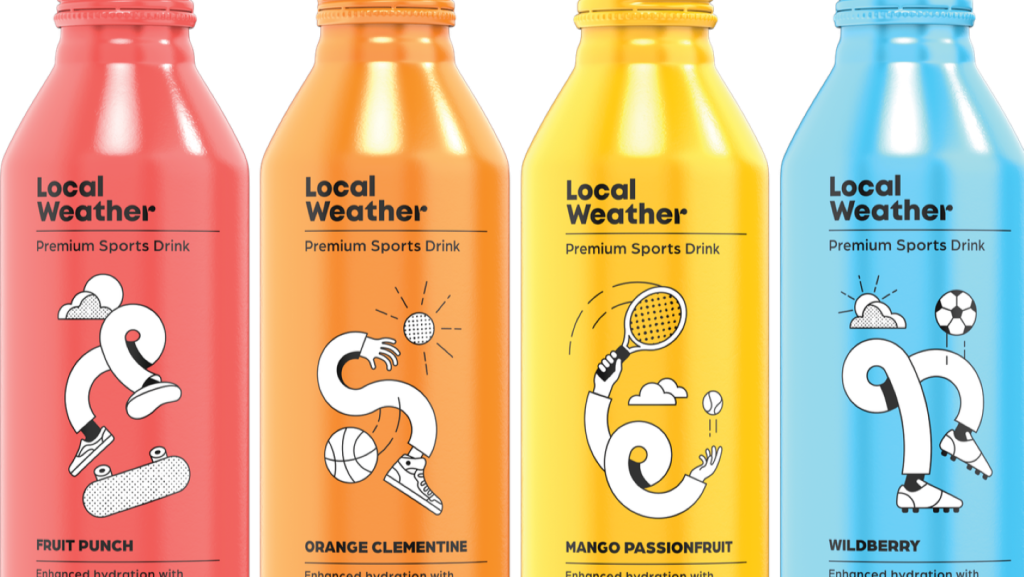
Earlier this month, the Boston-headquartered business secured its first acquisition with the purchase of sports-drinks brand Local Weather and is keen to enter other “non-competing categories”, CEO Steve Beck told Just Drinks.
“Our whole thesis when we bought Blue Monkey was to find a beverage platform that could support additional tuck-in acquisitions in non-competitive spaces but all in the kind of better-for-you… functional, aisles in grocery,” he said.
The acquisition of Local Weather gives the company a route into sports drinks and hydration. Beck said the group is “very interested” in energy drinks and suggested there could an opportunity for the business in functional sodas.
“At the end of the rainbow, we end up with several brands in several different non-competing categories and go to market as a portfolio company,” he added.
When asked whether further M&A deals were on the horizon in the next 12 to 18 months, Beck said “that’s the goal”.
He added: “We’re active in the market, largely those categories that I mentioned are interesting to us and so I would hope that in the next 12 to 18 we put a little bit more energy into those categories and see if we can get something done.”
Explaining why Blue Monkey saw the appeal in energy drinks and functional sodas, the CEO added: “They’re growing fast and they’re large categories. They’re both multi-billion-dollar market size… so they’re attractive from that perspective, one. Two, they’re changing fast and, when that happens, there’s a lot of opportunity to figure out how to manage that change.”
Blue Monkey building up its own brands from scratch is not out of the question, however.
The company is developing a shelf-stable, ready-to-drink coffee through the brand Café Saigon.
“There might be a play there where we grow it organically… and we’re in the early innings of figuring that out,” Beck said.
Blue Monkey is known for its namesake coconut waters and sparkling juice drinks. Its largest markets are Canada, where the Blue Monkey brand was founded, and parts of Asia, where it sells through large retailers.
Blue Monkey is also in the process of “working on programmes” for sales through Costco in the UK and Australia but there is “nothing firm yet”, Beck said.
The business is, for now, focused on growing the distribution of its products in the US following a recent rebrand. Blue Monkey’s fruit juice drinks and coconut waters are sold largely on the West Coast of the country in retailers like Costco, Erewhon, and Mother’s Markets.
It looks to launch the drinks in new packaging in natural stores like Sprouts and Whole Foods, as well as larger retailers like Albertsons and Kroger in the coming months.
The group is also launching Local Weather in Whole Foods in the next few weeks and will later move it “into our major retail set here in the US”, Beck said.
Reflecting on the appeal of the Local Weather brand, Beck said the drink “checks that box in the sports drink hydration market, which is dominated by Gatorade, Power Aid, Bodyarmor, which are super sugary drinks”.
The Local Weather brand also has “a very strong recycling story”, with the drink coming in a resealable aluminium packaging.
“The sports drink market, at least here in the US, is dominated by plastic,” Beck said. “The founders of the business did a good job of highlighting not only a simple clean ingredient deck but also a recycling story that resonated within that category. Our job really, is to plug that brand into our distribution system and network.”
With the remainder of its portfolio, the business believes there is plenty of “white space” to fill with Blue Monkey, Beck said, particularly with its sparkling fruit juice drinks.
“It sits between sort of 100% juice, which is a traditional market that has very little innovation, that’s been sort of dead for many, many years, and between sparkling water, which is a big category. There’s really no product that sits in the in sort of the mid-range between those two,” Beck said.


