
CCL Label, a provider of innovative label and packaging solutions, has emerged as a pivotal technology partner in the beverage industry’s shift toward circular packaging. Working at the intersection of materials science, process engineering, and digital technology, the company has developed solutions that truly make packaging recyclable. Its portfolio for Food & Beverage packaging shows how labels, adhesives, and smart features can be engineered as integral parts of recycling and reuse systems rather than obstacles to them.
This holistic approach has earned CCL Label the Innovation and Environmental awards in the 2025 Just Drinks Excellence Awards. The company won the Innovation award in the Smart Packaging category and the Environmental award in the Circular Packaging category. These awards reflect how CCL Label’s technologies help turn brands’ sustainability targets into operational reality without sacrificing product protection, aesthetics, or line efficiency.
Go deeper with GlobalData

Discover B2B Marketing That Performs
Combine business intelligence and editorial excellence to reach engaged professionals across 36 leading media platforms.
Smart packaging innovation: Connected labels that support circular systems
The Smart Packaging award recognizes CCL Label’s ability to bring together physical labels, advanced adhesives, and embedded RFID in a single, practical system. Rather than treating digital features as an add-on, the company has designed connectivity, traceability, and end-of-life performance as part of the same brief. The outcome is a label architecture that increases visibility across the product lifecycle while remaining compatible with the realities of high-speed beverage production.
A core element of this work is the integration of RFID technology with CCL’s eAgile IT platform. For high-value wines and spirits, item-level RFID provides far more than basic tracking. It supports bottle-specific traceability through the supply chain, enables secure authentication, and builds a data trail for each unit. In reuse schemes, the same infrastructure can confirm individual refills, track how often containers circulate, and measure the performance of refillable bottle pools. This gives brand owners the kind of granular operational and financial data that makes reuse systems easier to justify and manage, rather than positioning them purely as environmental initiatives.
CCL Label has also addressed one of the main concerns around RFID in the beverage sector: the risk that it will disrupt high-speed filling and labeling lines. Its smart labels are engineered as drop-in solutions that run under the same process conditions as conventional pressure-sensitive or sleeve-based decorations. This limits the need for new capital equipment, extensive retrials, or major changes to line layouts. In categories where downtime is expensive and changeovers are tightly managed, such process compatibility is a decisive factor in whether smart packaging is adopted.
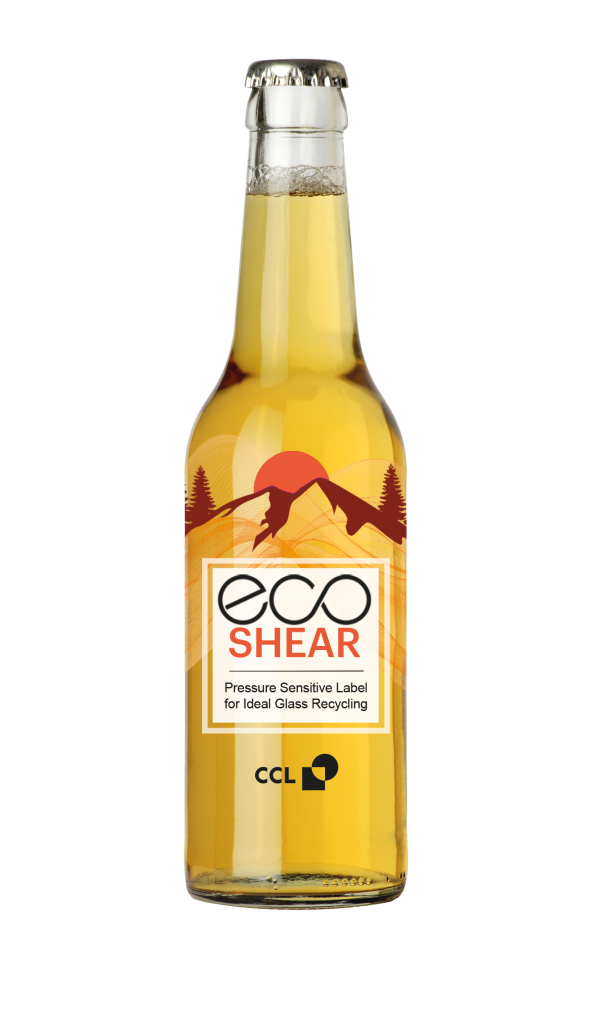
The way these digital features are reconciled with recycling is another important dimension. The company’s EcoShear® adhesive allows labels to detach during glass recycling, leaving very little residue on the cullet. This means that labels are removed effectively, supporting the production of clear, high-quality recycled glass.
CCL Label has paid similar attention to brand presentation. Its materials are capable of delivering the foiling, embossing, and other tactile finishes that are central to premium positioning in wine and spirits. The combination of smart functionality, recyclability, and high-end aesthetics makes it easier for brands to update their packaging architecture without losing the visual and sensorial cues that drive shelf appeal and price realization.
Circular packaging excellence: Labels designed around real recycling
In the Circular Packaging category, CCL Label was recognized for focusing on how labels actually behave in recycling and reuse systems, and for improving both the yield and quality of recovered material. Its work spans glass and PET, addressing different but interconnected barriers to building closed loops for beverage packaging.
On glass, EcoShear® adhesive is designed to overcome a familiar challenge: labels and glues that cling to bottles, create residue, and reduce the share of cullet that can be used for new glass – allowing glass to be recycled in a closed loop. EcoShear® allows labels to detach during standard recycling processes, helping deliver cleaner glass streams and higher yields of cullet. For beverage packaging, where clarity and color control usually are non‑negotiable, this improvement makes it easier to increase recycled content without compromising bottle appearance.
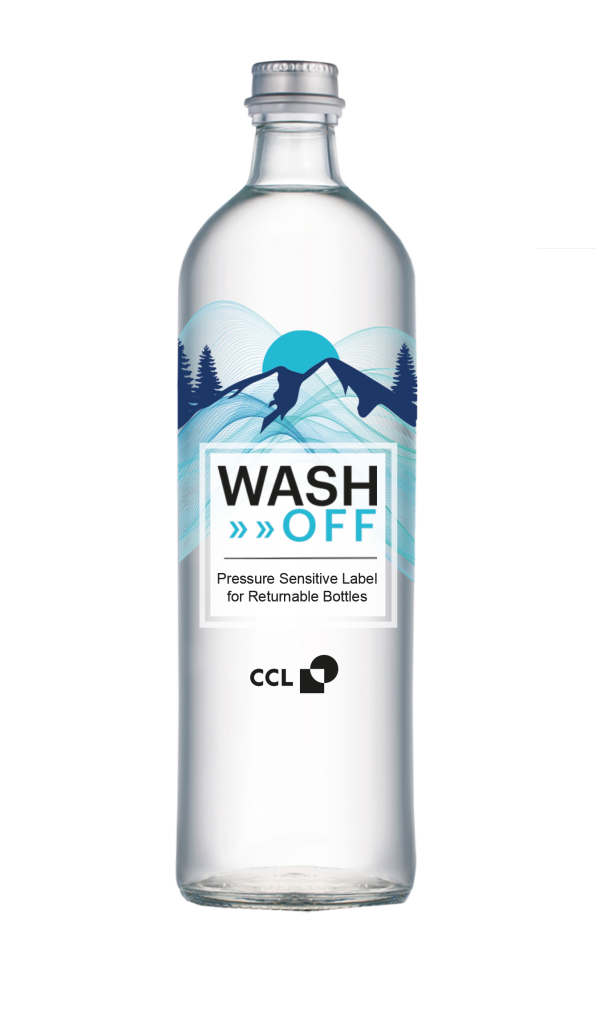
For refillable glass as well as rigid PET bottles, CCL Label has developed WashOff and Low-Temp WashOff label technologies that are tailored to reuse logistics and are successfully established in the market. These labels release cleanly in washing processes at temperatures as low as 58°C, which is significantly lower than many traditional systems require. Reducing wash temperatures cuts energy demand per cycle, and the saving compounds over the multiple trips that refillable bottles can make. The wash-off behavior is controlled and the inks are retentive so that labels come away without leaving ink or adhesive contamination in the washing bath, limiting process interruptions and reducing the need for frequent bath replacement. This approach improves the environmental balance of reuse while also supporting smoother plant operations.
On transparent PET, CCL Label’s EcoFloat® WHITE shrink sleeve solutions address one of the more stubborn issues in circular packaging: how to provide full light protection and decoration for sensitive products while still enabling bottle-to-bottle recycling at scale. Many dairy and light-sensitive beverages have traditionally used white HDPE or opaque PET containers, which are difficult to recycle back into food-grade applications. CCL Label’s work supports a move to transparent PET, which is better established in closed-loop food-grade recycling, without losing the functional benefits of opacity.
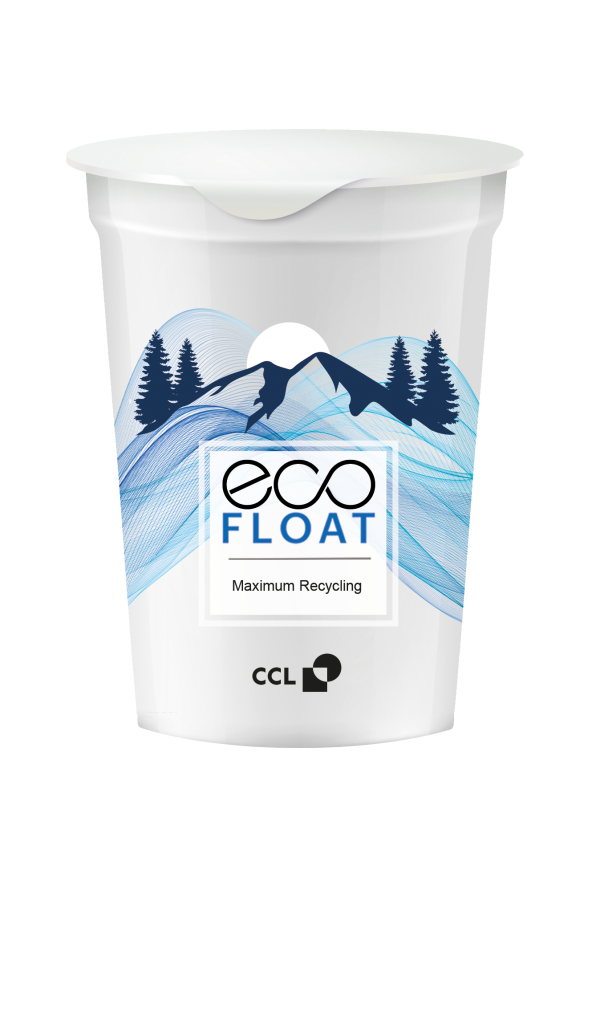
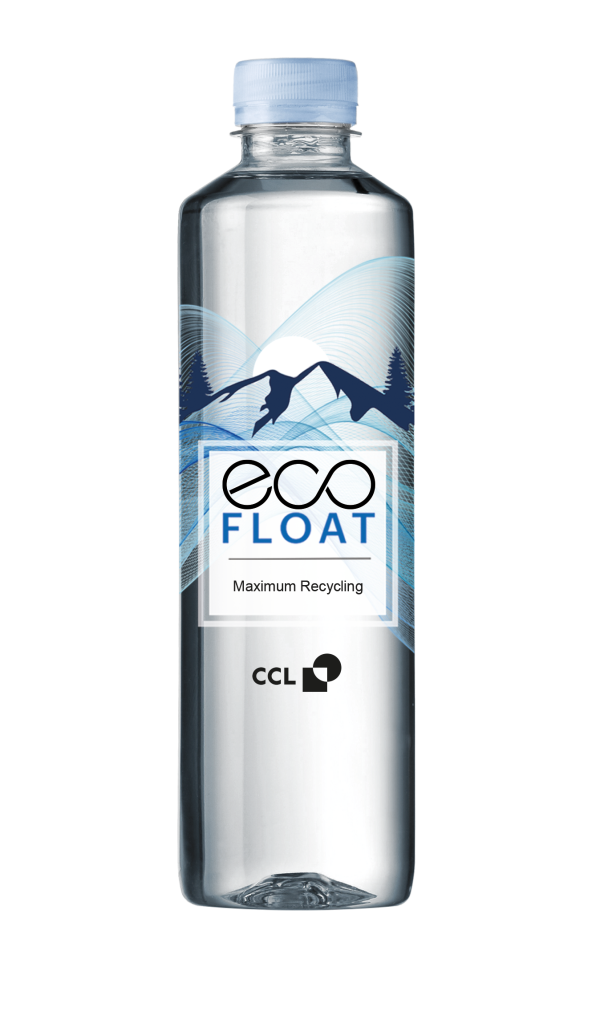
EcoFloat® WHITE is a low-density polyolefin sleeve with high opacity and an integrated light barrier, designed to be applied as a full-body decoration on PET bottles. The material is engineered so that, during sorting, near-infrared systems can still detect the underlying PET despite the opaque sleeve. The film’s specific gravity is below 0.93g/cm³, ensuring that in standard sink/float separation systems, the sleeve floats while PET flakes sink. A non-bleeding ink system keeps colorants enclosed within the sleeve during washing, preventing ink contamination of the wash bath and avoiding discoloration of the PET recyclate.
In practice, this means that light-sensitive products in the dairy or supplements aisle can be packed in clear PET with a sleeve that delivers the required light barrier and brand graphics, while recyclers still obtain a high yield of clean, food-grade PET. It also helps prevent mis-sorting and system losses caused by problematic inks or sleeve materials. Brands that move from white HDPE to this combination of PET plus EcoFloat® WHITE sleeve effectively step into a more circular material loop, with the label acting as an enabler rather than a barrier.
These solutions are supported by external assessments. EcoFloat® carries the “Made For Recycling” seal from Interseroh and complies with guidance from the European PET Bottle Platform and the Association of Plastic Recyclers (APR) in the United States. For beverage companies navigating tightening regulatory requirements and increased scrutiny of recyclability claims, this validation provides a degree of certainty that packaging changes will perform as expected in real-world recycling systems and can be reported credibly in ESG disclosures.
Across glass and PET, CCL Label has treated labels and adhesives as active levers in improving system performance. Cleaner material streams, higher yields of premium-grade recyclate, reduced contamination and energy use in reuse operations, and support for shifts into more recyclable base materials all point to impacts that go beyond incremental material tweaks.
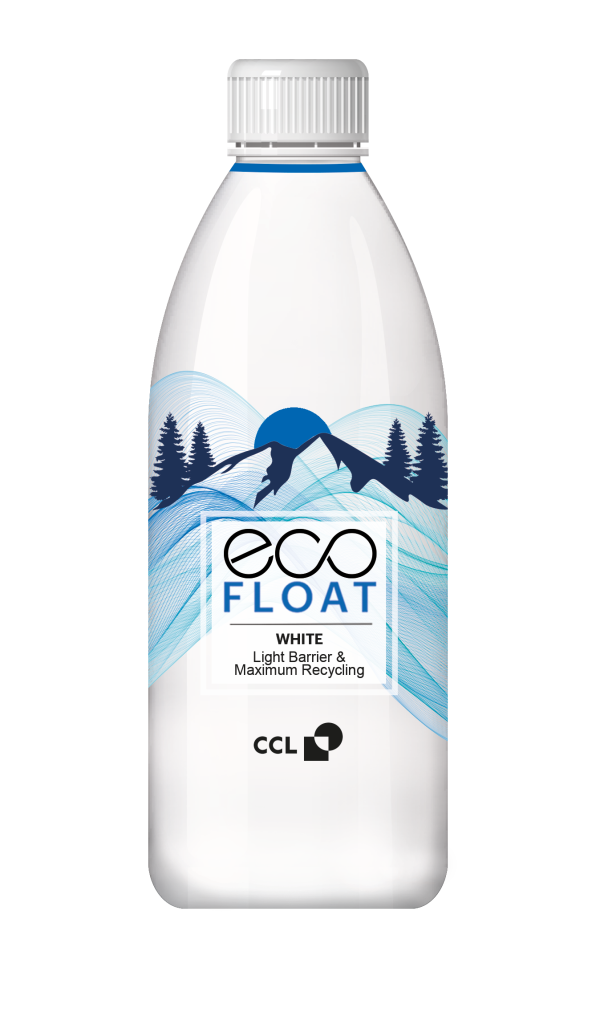
“EcoFloat® WHITE will enable greater recyclability for dairy packaging and other products that are light sensitive – we see it as a game changer. The dairy industry often uses opaque HDPE or PET bottles containing yogurt and probiotic drinks or similar products. However, these white bottles are rarely recycled back into food-grade applications for a number of reasons, including strict food contact regulations – so the bottles leave the packaging loop,” says Marika Knorr, Head of Sustainability and Communications at CCL. “By putting the light-blocking into the sleeve, companies can switch to transparent PET bottles that are recycled in a closed loop very widely.”
Company Profile
CCL Label is a global leader in innovative label and packaging solutions. With a worldwide network and state-of-the-art technologies, CCL helps brands present their products in a compelling, safe, and sustainable way. A key focus lies on sustainable packaging decoration that supports efficient recycling of the entire packaging, helping brands reduce environmental impact. CCL develops customized solutions that seamlessly combine design, functionality, and environmental responsibility.
Contact Details
E-mail: beverage@cclind.com
Tel: +4937645020
Links
Website: www.ccllabel.com


