

When you stop and think about it, calling an alcoholic drinks category ‘Ready To Drink’ is a bit of an oddity. Isn’t beer inherently ‘ready to drink’? Isn’t wine? I get the contrast with spirits but even here plenty of Cognac, whisky, Tequila and rum is consumed neat.
Where the term works is in its implication of convenience: crack the can, open the bottle and you’re in business. No need for fussy glassware or other paraphernalia; easily transportable and, in many (but not all) cases, at a low enough strength to be sessionable.
Go deeper with GlobalData


Access deeper industry intelligence
Experience unmatched clarity with a single platform that combines unique data, AI, and human expertise.
However, as the category has expanded, the RTD universe has grown increasingly fragmented, geared to a multiplicity of occasions and demographics. Hard seltzers, hard teas, hard coffees, hard kombuchas, cocktails, long drinks, FABs, no-alcohol RTDs, wine spritzers and coolers, RTS, the emerging generation of sports drink-adjacent alcoholic ‘ade’ drinks in the US… The list grows ever lengthier.
This inherent complexity makes drawing broad conclusions about the category unhelpful and, for brand owners, strategising rather complicated. It may be true that global RTD volumes are now plateauing but, if hard seltzers are slumping while cocktails and hard teas are booming, how meaningful is that piece of information?
If you were to ask someone involved in the drinks industry to identify the key properties of RTDs, they would probably – as outlined above – talk about convenience, portability and accessibility, as epitomised in different ways by canned hard seltzers or eye-catching small-format products like Sazerac’s hugely successful BuzzBallz.

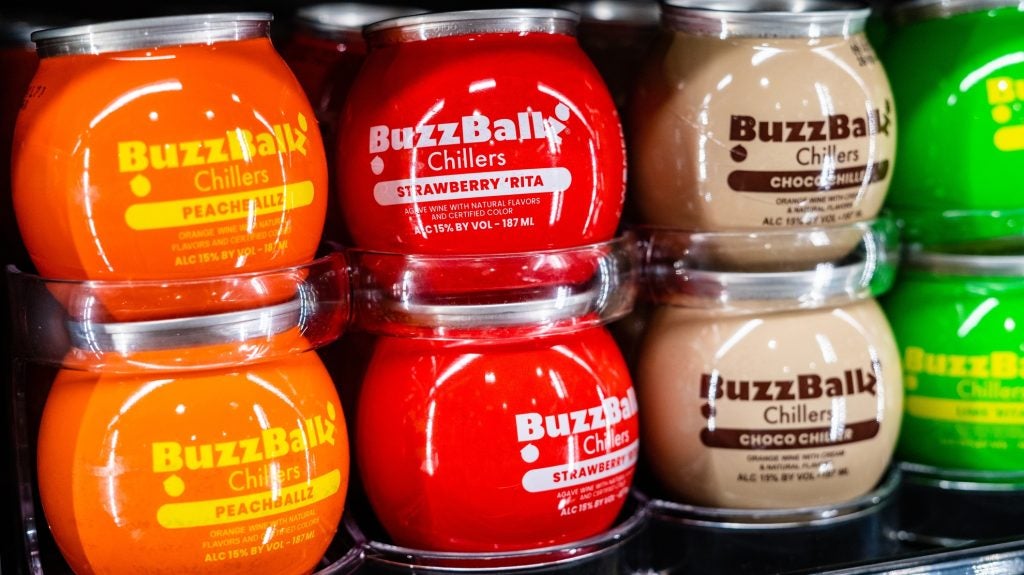
But that’s not true – or at least not in the same way – of all parts of the RTD category, as I was reminded when reading Just Drinks’ fascinating interview with Josh Rennie, the co-founder of premium RTD cocktail maker Whitebox. Strictly speaking, Whitebox and BuzzBallz are direct competitors, not just as RTD brands, but as pre-mixed cocktail brands. And yet the products, the pricing and the target consumers and occasions are very different.
I hesitate to call BuzzBallz a ‘novelty’ brand because that risks downplaying its evident success. But I would argue that it sells more on visual appeal, a unique format and a fun image than on its precise formulation of the finest-quality cocktail ingredients. And past experience suggests that such a product may have a finite life cycle, towards the end of which its appeal starts to fade – Rennie suggests maybe 10 years but then a decade of success for any brand is not to be sneezed at.
Comparing BuzzBallz with Whitebox – or any other premium pre-mixed cocktail brand out there – is like comparing apples and pears. Not that image and marketing don’t matter but the Whiteboxes of this world live or die chiefly on the quality of their liquid: get the cocktail formulation wrong and you’re a goner.
People who are buying premium pre-mixed cocktails are inherently more exacting
But get it right and you will not only sell more. You will also potentially achieve something that can be elusive for RTD brands: customer loyalty. Consumers in general, as everyone in the industry will admit, are far more fickle than they were a generation ago; in RTDs, as consumer research has shown, this behaviour is even more accentuated. Can’t get hold of your usual brand of lemon-flavoured hard seltzer? No problem – that other one does much the same job.
But people who are buying premium pre-mixed cocktails are inherently more exacting, not least because they’re spending more money. These are not products that are typically swigged from the can on the go but are much more likely to be poured into a glass, perhaps with ice and garnishes.
The format may circumvent the hassle involved in mixing the cocktail but, if the liquid isn’t up to snuff, what’s the point? By the same token, get the quality right and you’re much more likely to encourage repeat purchase. At the lower end of the market, flavour trumps brand; at the upper end, quality trumps everything else – and quality leads to loyalty.
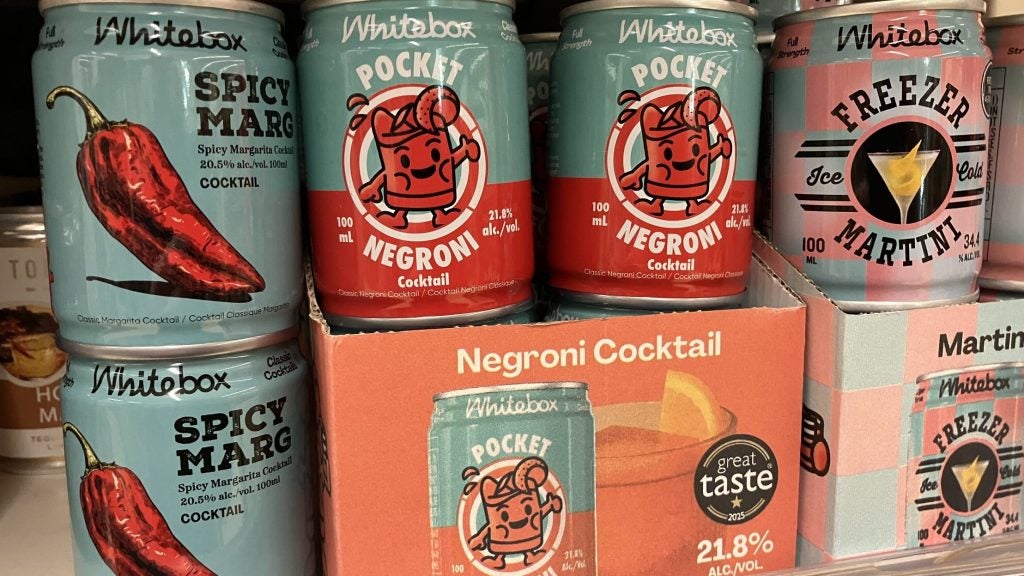
Rennie also makes an interesting point about the relative merits of ‘native’ RTD brands – pure-play names like Whitebox – and established franchises branching out into RTDs, in the hope the parent brand’s aura will rub off.
I’ve said before that extending a successful high-end brand into RTDs risks tarnishing that brand’s image but Rennie makes a more basic point: if a really strong brand makes an okay cocktail, it won’t excite the consumer. More precisely: attaching the name of a strong brand to a pre-mixed cocktail may elevate consumer expectations, making success harder to achieve.
Do retailers fully understand the differences between the likes of Whitebox and BuzzBallz?
It’s a complex topic and bear in mind that this is just one segment of the overall RTD category, which is not only much larger and more diverse than it was only a few years ago but also much, much more crowded.
The concern here is not so much the disconnect between supply and demand – consumers are continuing to buy these products – but the way that the trade, and retailers especially, manage their exposure to RTDs. Do they fully understand the differences, in terms of formulation, occasion and target consumer, between the likes of Whitebox and BuzzBallz? Or are they all just lumped together as ‘pre-mixed cocktails’?
There’s also only a finite amount of shelf space. Retailers could make some room by trimming the space allocated to spirits, wine and beer but, even so, they may be reluctant to take the risk of stocking too many different brands. Memories of the flavoured vodka boom-bust of a decade or so ago could loom large here.
Because RTDs are inherently fast-moving and dynamic, and because the barriers to entry are relatively low, there’s a temptation for brand owners to rush in, chase the latest trend and hope for the best. What they should be doing, I believe, is taking a breath and formulating a multi-stranded strategy geared to the many different segments, geographical markets, occasions and end consumers. In other words: more haste, less speed.


